The Chant That's Taken Over the League in 2027
3 September 2026
Every few years, a sound emerges from the stands that stops being background noise and becomes part of the game itself. In the late 2010s, it was the Viking clap that spread from Iceland across Europe. In the early 2020s, it was the synchronized drum beats and tifo displays in South American club football. But in 2027, the thing you hear at nearly every match, from the Premier League to the lower tiers of the English Football League, is not a clap or a drum. It is a chant. And it is not just one chant. It is a single, repeating, almost hypnotic phrase that has taken on a life of its own.
The chant in question is the "We Are Here" refrain, but the way it is delivered has changed so much that it now functions less like a traditional terrace song and more like a collective pulse. It is short, repetitive, and built on a call-and-response structure that any fan can pick up within seconds, regardless of language or club allegiance. That last point is crucial. Unlike club-specific anthems like "You'll Never Walk Alone" or "Blue Moon," this chant does not belong to any single team. It belongs to the away end, the home end, the neutral section, and sometimes even the players themselves.
To understand why this particular chant has become the defining sound of the 2027 season, you have to look at how it started, why it spreads so quickly, and what it says about the current state of fan culture. This is not a story about a catchy tune. It is a story about identity, timing, and the strange way that collective emotion finds a vessel.

The Origin Story: Not Where You Think
Most people assume the chant began in a major European league, given its current saturation. The truth is more mundane and more interesting. The chant first gained serious traction in the 2025-26 season in the Scottish Championship, specifically at a mid-table club that was fighting relegation. The club had a young manager who had instilled a high-press system, and the fans, desperate for any sign of life, started a simple two-line exchange. The home crowd would shout "We are here," and the away section would respond with "So are we." It was not poetic. It was not clever. But it was defiant.The reason it worked was psychological. When a team is struggling, the crowd often falls silent because they are anxious. Silence reads as disapproval, and that feeds back into the players' confidence. The "We Are Here" chant was a way of saying, "We have not left, even if we are losing." It was less about supporting a specific action and more about affirming presence. That distinction matters. Traditional chants are usually reactive, celebrating a goal or mocking an opponent. This one is proactive. It creates a baseline of noise that does not depend on what is happening on the pitch.
From Scotland, the chant jumped to the English Championship within months. The mechanism for that spread was not television or social media highlights, although those helped. It was the away fan culture itself. Supporters who heard it in one stadium took it back to their own ground the following week. Because the chant has no club-specific lyrics, it does not feel like copying. It feels like adopting a shared language. By the start of the 2026-27 Premier League season, it was already being used by at least half the clubs. By the winter transfer window, it was everywhere.
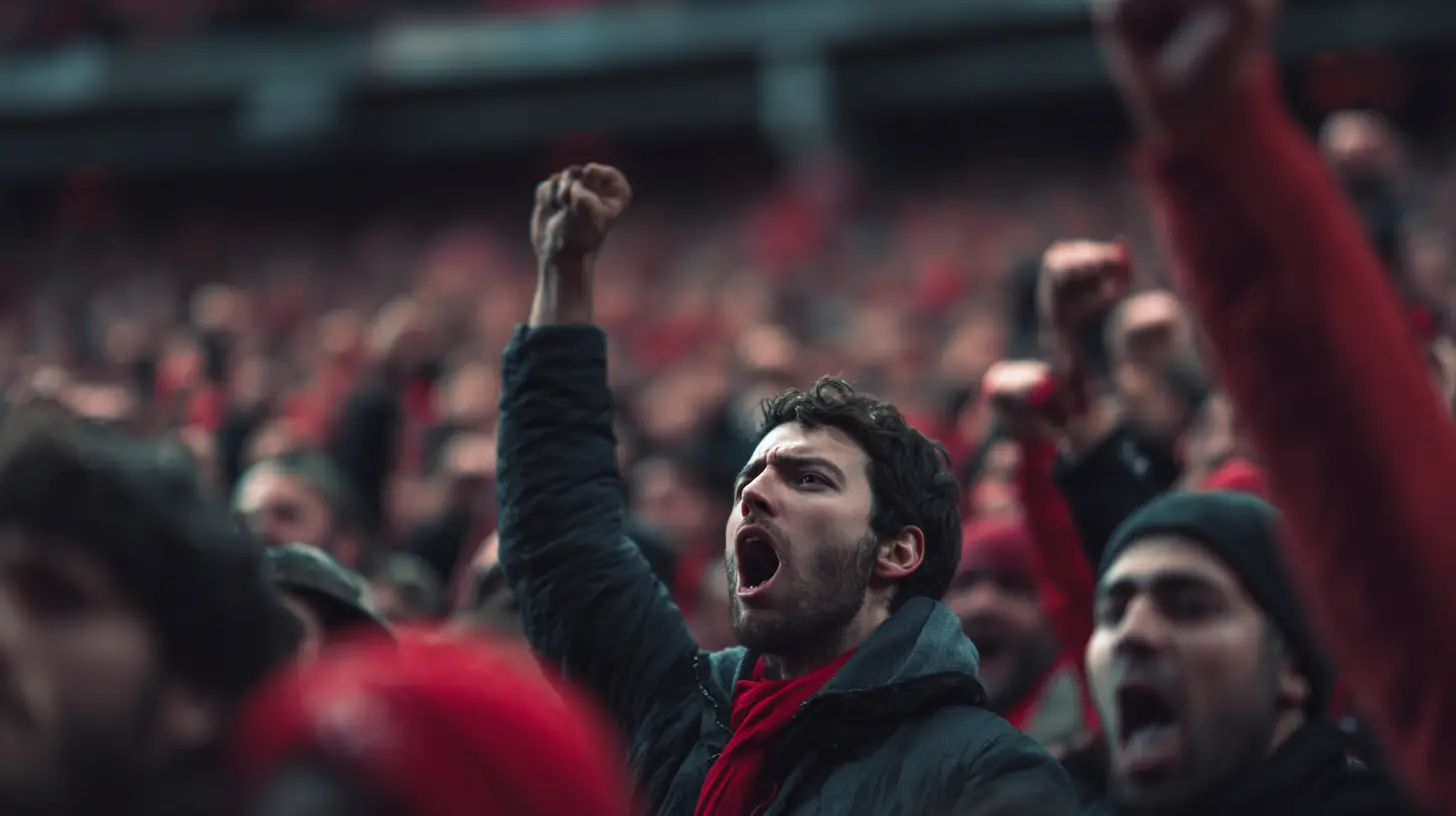
Why It Works: The Mechanics of Collective Noise
The chant's success is not accidental. It has a specific rhythmic structure that aligns with the human heartbeat at moderate exertion. The phrase "We are here" is two iambs, which is the same stress pattern as the word "hello" or the phrase "good night." That makes it incredibly easy to shout in unison without needing a musical ear. The response, "So are we," mirrors that rhythm exactly. This creates a loop that can go on for minutes without becoming chaotic.Compare that to longer chants like "Seven Nation Army," which requires a melodic leap that many casual fans cannot hit accurately. Or compare it to the "Ole" chant, which only works when a team is dominating possession. The "We Are Here" chant is rhythmically democratic. You do not need to know the words because there are only three of them. You do not need to know the tune because it is spoken more than sung. This lowers the barrier to participation to nearly zero, which is why it fills entire stadiums within two repetitions.
There is also a spatial element. The chant is loudest when it is traded between opposite ends of the ground. The physical distance between the two groups creates a natural delay, and that delay becomes part of the sound. It is almost like a sonic ping-pong match. For broadcast viewers, the effect is even more pronounced because the microphones pick up the alternating directions. It creates a sense of three-dimensional space that typical wall-of-sound chants do not.

The Tactical Impact on Players
Here is where the analysis moves beyond fan culture and into actual match performance. Players have reported, in post-match interviews and behind-the-scenes documentaries, that the chant has a measurable effect on their spatial awareness. That sounds like a stretch, but consider the physics. When a crowd is making a continuous, undifferentiated noise, players rely more on visual cues and peripheral vision because auditory cues are unreliable. But the alternating nature of "We Are Here" gives players a directional audio signal. When the home fans shout, the home players know the ball is likely in the attacking third. When the away fans respond, it signals a turnover or a defensive action.This is not a conscious process. It is a subconscious anchoring effect. Several sports psychologists have noted that rhythmic auditory stimuli can help with timing and coordination, particularly for actions that require split-second decisions, like a goalkeeper's distribution or a striker's run off the shoulder. The chant effectively acts as a metronome for the home team when they are in possession, and a disruptor for the away team because it breaks their concentration patterns.
However, there is a downside. The chant can become a crutch. Teams that play in stadiums where the chant is constant may struggle in quieter environments, such as neutral-venue cup finals or international matches where the crowd is more mixed. There is anecdotal evidence from the 2026 World Cup that some players from leagues with heavy "We Are Here" usage were slightly slower in adapting to the more fragmented crowd noise in the tournament. This is not a proven causal link, but it is a pattern that coaching staffs have started to notice.

The Dark Side: When the Chant Becomes a Weapon
No discussion of a dominant chant would be complete without addressing how it can be misused. In the 2026-27 season, there have been several incidents where the chant was turned into a tool of intimidation, not against the opposing team, but against individual players. The most common variant is when a home crowd directs the chant at a specific visiting player who has made a high-profile mistake, waiting for the player to touch the ball and then shouting "We are here" at maximum volume. The intent is to remind the player that they are being watched and that the crowd has not forgotten their error.This is a departure from traditional booing. Booing is a release of frustration. This targeted chanting is a form of sustained psychological pressure. It is more insidious because it is not overtly abusive, so it does not trigger the usual protocols for discriminatory or threatening behavior. Referees cannot stop it. Clubs cannot sanction it. But players have admitted that it affects their decision-making, making them more conservative and less willing to take risks.
There is also a darker geopolitical layer. In some derby matches, the chant has been adapted with regional variations that carry sectarian or nationalist undertones. The basic structure remains the same, but the words change to reference historical grievances. This has led to several clubs issuing statements asking fans to keep the chant clean, but policing a three-word phrase across tens of thousands of people is nearly impossible. The football authorities are in a bind. If they ban the chant outright, they risk alienating the majority who use it harmlessly. If they ignore the variations, they allow a toxic subculture to flourish under the cover of a popular song.
The Commercial Response: Merchandising and Licensing
The commercial world has been quick to latch on. By the middle of the 2027 season, you could buy "We Are Here" scarves, flags, and even face masks at every major club's megastore. The interesting part is not the merchandise itself, but the licensing structure. Because the chant is not owned by any single club, multiple brands have tried to trademark variations of the phrase. This has created a legal gray area.One sportswear giant attempted to register "We Are Here" as a slogan for a new boot line. The application was rejected by the trademark office on the grounds that it was too generic and lacked distinctiveness. But that did not stop smaller companies from printing the phrase on unofficial merchandise and selling it outside stadiums. The clubs themselves have been cautious. They know that trying to own a fan chant is a public relations disaster, as seen in the past when clubs tried to copyright "You'll Never Walk Alone" and faced massive backlash. So the commercial response has been to create co-branded versions, like "We Are Here, [Club Name]" which are club-specific and therefore protectable, but these have not caught on because they break the universality that made the original so powerful.
The Role of Social Media and Short-Form Video
The chant's spread has been supercharged by short-form video platforms. Clips of a full stadium doing the call-and-response are visually and audibly satisfying, and they perform exceptionally well in algorithmic feeds. But there is a nuance that most analysts miss. The videos that go viral are not from the biggest clubs. They are from smaller clubs, non-league sides, and even women's matches where the crowd is smaller but the acoustics are tighter. This has created a feedback loop where the chant is associated with authenticity and grassroots passion, which makes it even more appealing to fans who are tired of the corporate atmosphere in top-flight stadiums.This is a double-edged sword. The more the chant is associated with "real" football, the more pressure there is on Premier League clubs to replicate that atmosphere. Some clubs have responded by placing microphones near the away section to boost the volume artificially, which has led to accusations of "fake crowd noise." Others have tried to encourage the chant by putting the lyrics on the big screen, which defeats the entire purpose because the chant is supposed to be spontaneous. The best practice, according to fan liaison officers, is to do nothing. Let it happen. The moment a club tries to manufacture it, the chant loses its meaning and the crowd moves on to something else.
The Comparison to Past Chant Phenomena
To fully appreciate what is happening in 2027, it helps to compare this chant to previous viral football sounds. The "Viking clap" was powerful because it was slow and menacing, but it required a drum and a leader. The "Poznan" (turning your back and jumping) was visual, not auditory, and it was easily co-opted by clubs as a marketing gimmick. The "Allez Allez Allez" from Liverpool's 2018 Champions League run was club-specific and tied to a specific moment of success. When the team's form dipped, the chant faded.The "We Are Here" chant is different because it is not tied to success or failure. It is tied to presence. That is why it has survived losing streaks, managerial sackings, and even relegation battles. In fact, it often gets louder when a team is losing, which is the opposite of most chants. This inversion of the traditional dynamic is what makes it so resilient. It does not rely on hope. It relies on stubbornness. And stubbornness is a renewable resource in football fandom.
The Future: Will It Last or Burn Out?
The big question for the 2028 season and beyond is whether the chant will become a permanent fixture or fade away like so many fads. There are two schools of thought. The pessimistic view is that all chants have a lifecycle. They emerge, saturate, and then become parodied. Once a chant reaches the level of mainstream recognition, it is only a matter of time before it is used ironically, and irony kills sincerity. We are already seeing signs of this in the lower leagues, where some fans sing it with exaggerated slowness to mock the trend.The optimistic view is that the chant has become a lingua franca for football fans, similar to the way that "Ole" is used across Spanish-speaking countries or "Allez" is used in France. It may evolve, but it will not disappear. The key factor will be whether it can adapt to different contexts. Already, there are variations for cup ties, for derbies, and for international matches. The core structure is flexible enough to accommodate new lyrics, which gives it a survival advantage over more rigid chants.
For players and coaches, the advice is to embrace it but not rely on it. Use the home crowd's chant as a cue to increase pressing intensity, but also practice in silent or hostile environments so that the team does not become dependent on auditory reinforcement. For fans, the best approach is to use the chant judiciously. If it is used every minute of every game, it becomes white noise. If it is saved for key moments, like a second-half comeback or a stoppage-time equalizer, it retains its power.
Common Misconceptions and Mistakes
There are several misconceptions about the chant that are worth clearing up. First, it is not true that the chant originated in the Premier League. As noted, it came from the Scottish lower divisions. Second, it is not true that the chant is always positive. It can be used sarcastically, especially when a team is playing badly and the fans want to remind the players that they are still watching. Third, it is not true that the chant is easy to perform for everyone. For fans with hearing impairments or speech difficulties, the chant is actually exclusionary. Some clubs have started to incorporate visual elements, like raised scarves or hand signals, to make the chant more inclusive, but this is still a work in progress.A common mistake that clubs make is trying to force the chant during moments of high tension, like a penalty shootout. The chant requires a steady rhythm, and during high anxiety, the tempo speeds up and the synchronization collapses. It is far more effective during sustained pressure, like a long spell of possession or a period of defensive resilience. Another mistake is using the chant to drown out negative chants from the opposition. This rarely works because it escalates the volume war and leads to both sets of fans shouting over each other, which destroys the call-and-response structure. The chant only works when there is a gap between the two groups.
Practical Advice for Fans and Clubs
For fans who want to start the chant in their own stadium, the best approach is to begin in a small group, ideally in the section closest to the halfway line, where the acoustics carry best. Do not try to start it during a quiet moment when the game is tense. Wait for a natural break, like a goal kick or a substitution. The first shout should be loud and clear, not sung. The response will come from the opposite end if the timing is right. If it does not catch on, do not force it. Try again a few minutes later. The chant has a snowball effect, but it needs a critical mass of about fifty voices to start rolling.For clubs, the best practice is to avoid any official endorsement. Do not put it on the scoreboard. Do not have the stadium announcer lead it. Do not play it over the PA system. The moment it becomes an official part of the matchday experience, it loses its subversive charm. Instead, focus on creating an environment where spontaneous chanting is possible. That means reducing the volume of piped-in music before the game, ensuring that the away fans are not isolated in a corner with poor sightlines, and allowing safe standing areas where groups can gather and coordinate.
The Broader Cultural Significance
The chant is not just a football phenomenon. It reflects a broader cultural shift in how people express collective identity in the 2020s. In an era of fragmented media and individualized consumption, the chant is a rare example of mass synchronization that is not mediated by a screen. It is physical, vocal, and immediate. It is also a reaction against the hyper-commercialization of football. Fans who feel like customers rather than participants are using the chant to reclaim a sense of agency. The phrase "We are here" is a statement of existence in a world where the sport's governing bodies often seem to value broadcast rights over matchday atmosphere.This is why the chant has also appeared at non-football events, such as rugby matches, cricket test matches, and even political rallies. It has become a generic template for group affirmation. That is both its strength and its weakness. Its strength is that it is universally understandable. Its weakness is that it can be co-opted by any group for any purpose, which dilutes its specific meaning in a football context. For now, though, it remains the sound of the 2027 season, and it shows no signs of stopping.
Final Thoughts
The "We Are Here" chant is a case study in how a simple idea can spread through a complex social network. It works because it is easy, it is inclusive, and it is not tied to any single club or outcome. It has changed the way players perceive crowd noise, the way clubs think about atmosphere, and the way fans express their loyalty. It is not perfect. It has been weaponized, commercialized, and parodied. But at its core, it is a reminder that football is nothing without the people who show up.If you are a fan, the next time you hear the chant start, join in. If you are a player, listen to it and let it ground you. If you are a club executive, resist the urge to control it. And if you are a neutral observer, just enjoy the sound of thousands of people saying the same thing at the same time, because that is a rare and beautiful thing in a world that is increasingly noisy but rarely in harmony.
all images in this post were generated using AI tools
Category:
Fan ReactionsAuthor:

Onyx Frye
Discussion
rate this article
2 comments
Sylas Murphy
The chant has become a powerful unifier for fans this season. Its catchy rhythm and memorable lyrics have transcended team rivalries, creating an electric atmosphere at games. It's exciting to see how one simple rallying cry can bring people together and elevate the sport.
September 20, 2026 at 3:03 AM
Onyx Frye
Absolutely. It's amazing how a single chant can create such a strong sense of community among fans. The energy it brings to the games is undeniable.
Declan Jacobs
The new chant has united fans across the league, showcasing passion and creativity. It elevates the atmosphere at games and strengthens team loyalty.
September 15, 2026 at 4:53 AM
Onyx Frye
Absolutely! It's amazing to see how a simple chant can bring fans together and create such a vibrant game-day experience.