Breaking Barriers: Athletes Redefining the Limits of Human Performance
14 August 2026
The idea of a "limit" in sport has always been a moving target. For decades, experts confidently declared that the four-minute mile was physically impossible. Then Roger Bannister ran it in 1954, and within a few years, dozens of runners had done the same. The barrier was never really in the legs. It was in the mind, the training methods, and the collective belief about what the body could do.
Today, we are watching that same story play out across nearly every discipline. Marathoners are knocking on the door of the two-hour mark. Sprinters are running faster than any human has ever moved on foot. Gymnasts are twisting through the air in ways that would have been dismissed as fantasy a generation ago. The question is no longer whether limits exist, but how they get broken, who breaks them, and at what cost.
This is not a simple story of better genetics or harder work. It is a story of smarter science, smarter recovery, and a fundamental shift in how athletes approach their own bodies. It is also a story with real trade-offs, real risks, and real questions about what we are actually chasing.

The Myth of the Fixed Ceiling
Most people assume that human performance follows a natural curve that eventually flattens out. The logic seems sound. Bones have a certain density. Muscles have a certain contractile speed. Lungs have a certain capacity. At some point, the math has to stop working.But history keeps proving that assumption wrong. Every time a record is set, coaches and scientists study it, break it down, and figure out what made it possible. Then they ask a simple question: what do we change next? The ceiling is not a physical object. It is a snapshot of current knowledge, current tools, and current beliefs.
Consider the high jump. For decades, the straddle technique was the standard. Athletes cleared the bar face-down, and records crept upward in small increments. Then Dick Fosbury introduced the Fosbury Flop at the 1968 Olympics. He jumped backward, headfirst, and won gold. Within a decade, every serious high jumper in the world had switched. The technique did not make athletes stronger. It made them more efficient. The limit was not in the body. It was in the method.
The same thing happens in cycling, swimming, and weightlifting. New equipment, new training protocols, and new nutritional strategies do not just shave off seconds. They change the entire equation of what is possible. The barrier is never a wall. It is a set of assumptions that eventually get replaced.

The Science of Marginal Gains
One of the most misunderstood concepts in modern sport is the idea of marginal gains. The term became famous through British Cycling, where coach Dave Brailsford reportedly looked for a one percent improvement in every single area, from bike fit to pillow choice to hand-washing technique. The results were dramatic, including multiple Olympic gold medals and Tour de France victories.But marginal gains are not about doing one hundred tiny things randomly. They are about identifying the specific bottlenecks that limit an athlete's performance and addressing them systematically. A cyclist with terrible aerodynamics will gain more from a wind tunnel session than from a new saddle. A swimmer with a weak pull will gain more from strength work than from a faster swimsuit. The key is not the number of changes. It is the relevance of those changes to the individual athlete.
This is where many amateur athletes go wrong. They read about what professionals do and try to copy everything at once. They buy compression boots, take cold plunges, wear special sleep masks, and load up on supplements. But they skip the foundational work: consistent training, proper rest, and honest self-assessment. The result is a lot of expense and very little improvement.
The best approach is to keep a training log that tracks not just workouts but also sleep, mood, nutrition, and perceived effort. After a few weeks, patterns emerge. Maybe you always feel flat after a late-night meeting. Maybe your legs are dead on days you skip breakfast. Those patterns point to the real bottlenecks. Fix those first. The marginal gains come after the major gains.

Breaking the Marathon Barrier: The Sub-Two-Hour Question
The marathon has become the most visible battleground for human performance. The world record has fallen repeatedly over the past two decades, and the sub-two-hour mark has taken on an almost mythical status. Eliud Kipchoge came close in 2019, running 1:59:40 in a specially designed event in Vienna, though the run was not recognized as an official world record because of the controlled conditions, including pacemakers and a moving vehicle that provided drafting.What made that attempt possible was not just Kipchoge's physical ability. It was a carefully engineered race. The course was flat and fast. The pacemakers rotated in a formation that shielded him from wind. The shoes were designed with a carbon plate and a thick foam midsole that returned more energy with each stride. The nutrition plan was timed to the minute. Every variable was controlled.
This raises an important question: what counts as a human limit? If a runner needs specially designed shoes and a team of pacemakers to break two hours, are they truly breaking a barrier? Or are they benefiting from technology in a way that changes the nature of the event?
There is no easy answer. Every record in history has been set under some kind of favorable condition. Bannister had perfect weather and pacers. Modern sprinters run on synthetic tracks that are far faster than the cinder tracks of the past. Swimmers have benefited from pool design and suit technology. The line between "training" and "technology" is always blurry.
What matters for the rest of us is simpler. You do not need carbon-plated shoes or a team of pacemakers to improve your own marathon time. You need to run more consistently, build a stronger aerobic base, practice race-day nutrition, and learn to pace yourself honestly. The sub-two-hour barrier is a spectacle. Your own personal barrier is the one that actually matters.
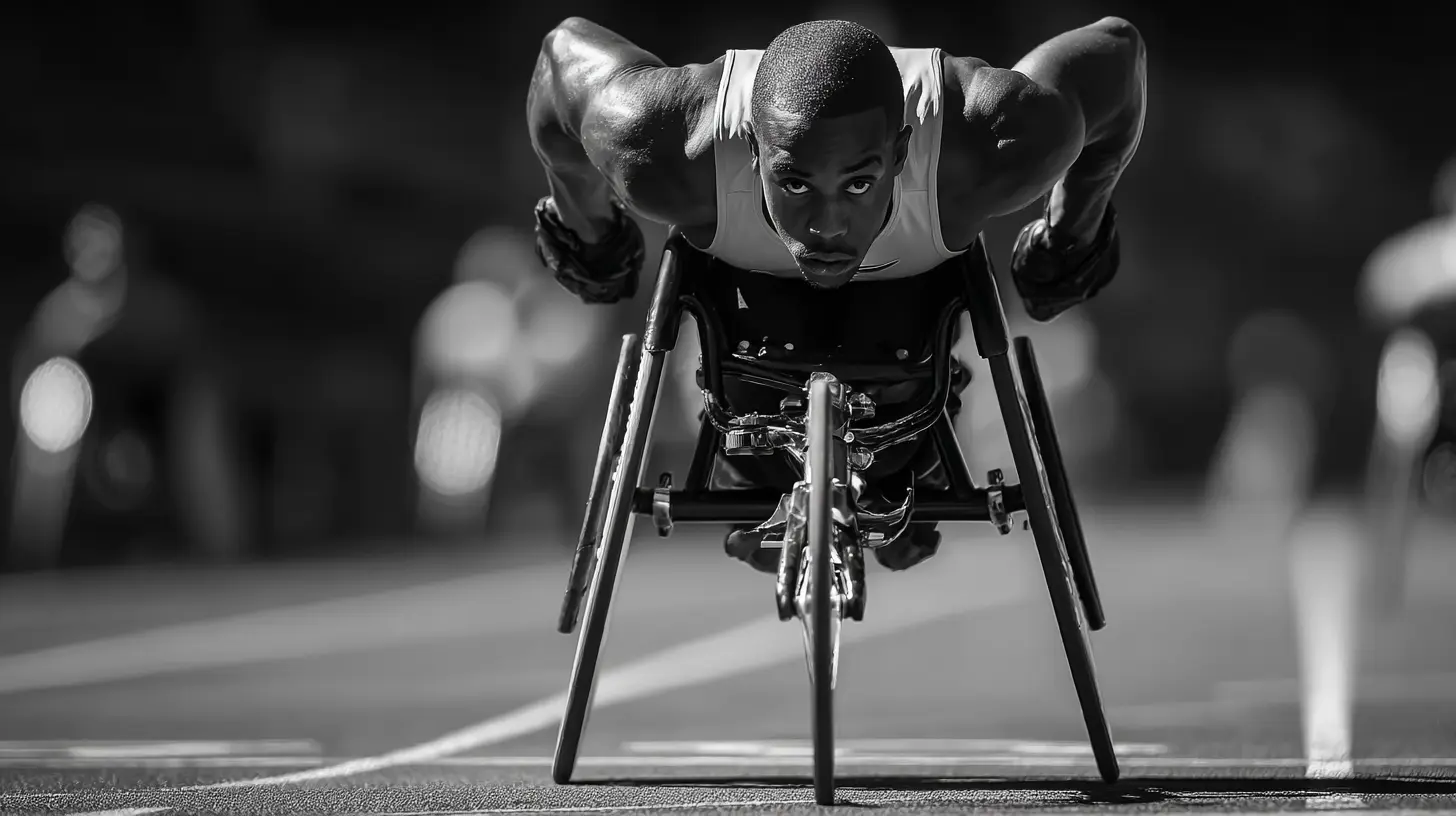
Strength and Power: The New Physics of Sprinting
Sprinting has seen a similar revolution. For years, the conventional wisdom was that speed was largely genetic. You either had fast-twitch muscle fibers or you did not. Training could help, but only so much.That view has changed. Modern sprint coaches understand that speed is a skill as much as a physical trait. It involves how you apply force to the ground, how you position your body at each phase of the race, and how you manage the transition from acceleration to top-end speed. Biomechanics researchers use force plates and high-speed cameras to analyze every stride. The data reveals that even elite sprinters have technical flaws that can be corrected.
One of the most important findings is the role of horizontal force. For a long time, athletes and coaches focused on vertical jumping and squat strength as indicators of sprinting ability. But sprinting is not about jumping straight up. It is about pushing backward against the ground to move forward. Exercises that develop horizontal power, like sled pushes, heavy hip thrusts, and bounding, have become staples of sprint training.
Another key insight is the importance of relaxation. Many athletes tense up when they try to run fast. They grip their hands, clench their jaws, and shorten their strides. This creates braking forces and wastes energy. Elite sprinters learn to stay loose in the upper body while driving hard with the lower body. It sounds counterintuitive, but sometimes the fastest way is the most relaxed way.
The trade-off is that sprint training is hard on the body. Hamstring strains, Achilles issues, and knee problems are common. The best athletes do not just train fast. They train smart, with a focus on recovery, mobility, and gradual progression. Pushing too hard too soon is a classic mistake that leads to injury and lost time.
The Mental Game: What Actually Happens in the Mind
Physical preparation is only half the story. The mental side of performance is just as important, and it is often the most misunderstood.Many people assume that elite athletes are simply more motivated or more disciplined than the rest of us. That is true to a degree, but it misses the deeper point. The best athletes do not just push through pain. They have developed a sophisticated relationship with discomfort. They know how to distinguish between pain that is a warning signal and pain that is a normal part of effort. They know how to stay present in the moment instead of thinking about the finish line or the scoreboard.
This is a skill that can be trained. Visualization is one method. Athletes mentally rehearse their races, imagining every turn, every split, every sensation. This builds familiarity and reduces anxiety. Another method is self-talk. The way you talk to yourself during a hard effort can have a huge impact on performance. Negative thoughts like "I cannot keep this pace" become self-fulfilling. Positive, instructional thoughts like "stay relaxed, push from the hips" keep you focused on what you can control.
Breathing is another underrated tool. Slowing down your breath, especially during moments of stress, activates the parasympathetic nervous system and helps you stay calm. This is why you see athletes taking deep breaths before a big free throw or a penalty kick. They are not just relaxing. They are physiologically changing their state.
The common mistake is to treat mental training as something separate from physical training. In reality, they are deeply connected. A tired body produces a weak mind. A stressed mind produces a tense body. The best athletes train both together, often under fatigue, so that the mental skills are automatic when it matters most.
Recovery as a Performance Tool
There is a persistent myth that more training is always better. Athletes who grind through every session, never take rest days, and treat recovery as a sign of weakness often end up injured, burned out, or both.The truth is that training does not make you faster. Training breaks you down. Recovery makes you faster. When you run, lift, or sprint, you create microscopic damage in your muscles and deplete your energy stores. Your body adapts during the rest period, rebuilding stronger than before. Without adequate recovery, that adaptation never happens. You just accumulate fatigue.
Modern athletes treat recovery with the same seriousness as training. They schedule rest days. They prioritize sleep, often getting nine or ten hours a night. They use active recovery, like easy cycling or swimming, to promote blood flow without adding stress. They pay attention to nutrition, especially protein intake after hard sessions.
One of the most debated topics in this area is the use of cold water immersion and contrast baths. Some athletes swear by them. Others find that they blunt the training response, especially when used immediately after a strength session. The research is mixed. Cold water reduces inflammation, which sounds good, but inflammation is also a signal that triggers adaptation. Using cold water too often may actually reduce the long-term gains from training.
The practical advice is to use recovery tools strategically. Save ice baths for after very hard races or high-volume weeks when you need to bounce back quickly. On normal training days, let your body do its own work. Sleep and food are almost always more important than any gadget or therapy.
The Role of Technology: Friend or Foe
Wearable technology has exploded in popularity. Watches track heart rate, pace, sleep, and recovery scores. Apps analyze your running form. Headphones play music that claims to sync with your cadence. The data can be useful, but it can also be overwhelming and even harmful.The biggest problem with technology is that it can distract from how you actually feel. If your watch says your recovery score is low, but you feel great, what do you do? If your watch says you are ready to push, but your legs feel heavy, what do you do? The best athletes use data as a guide, not as a boss. They check the numbers, but they also listen to their bodies.
Another issue is that some technologies create false precision. A watch that measures heart rate is fairly reliable. A watch that claims to measure "training readiness" is making a guess based on algorithms. Those algorithms are not always accurate. They do not know about your stress at work, your relationship issues, or the fact that you slept poorly because of a noisy neighbor.
The best practice is to use technology for tracking trends over time, not for making day-to-day decisions. Look at your weekly mileage, your average heart rate during key workouts, and your sleep duration. If you see a downward trend in performance, adjust your training. But do not obsess over a single day's score. Your body is the final authority.
Common Mistakes and Misconceptions
There are several recurring mistakes that hold athletes back, regardless of their level.The first is doing too much too soon. This is especially common in runners. They get excited about a goal, increase their mileage rapidly, and end up with shin splints, stress fractures, or tendinitis. The rule of thumb is to increase weekly mileage by no more than ten percent. That is not a magic number, but it is a safe starting point.
The second mistake is ignoring strength training. Many endurance athletes think that lifting weights will make them bulky and slow. In reality, strength training improves running economy, reduces injury risk, and helps maintain form late in a race. Two or three short sessions a week are enough to see benefits.
The third mistake is neglecting mobility. Flexibility is not the same as mobility. You can be flexible and still unable to move well through a full range of motion. Mobility work, like dynamic stretching and joint rotations, prepares the body for the demands of sport. Static stretching has its place, but it is best done after a workout, not before.
The fourth mistake is comparing yourself to others. This is the most mentally damaging habit. Someone else's training plan, body type, and life circumstances are completely different from yours. What works for them may not work for you. Focus on your own progress, your own data, and your own goals.
The Future of Human Performance
It is tempting to think that we are reaching the end of what is possible. Records are getting harder to break, and the remaining gaps are measured in fractions of a second. But that view ignores the history of sport. Every generation believes it has hit the ceiling, and every generation is proven wrong.The next breakthroughs will likely come from unexpected places. Maybe it will be a new understanding of how the brain controls muscle activation. Maybe it will be a better way to fuel the body during extreme endurance events. Maybe it will be a shift in how we define sport itself, with new formats that reward different skills.
What is certain is that the athletes who break barriers will not be the ones who simply train harder. They will be the ones who train smarter, who question assumptions, who listen to their bodies, and who find joy in the process. The limit is not a fixed point. It is a horizon that moves as we move toward it.
Practical Takeaways for Any Athlete
If you want to push your own limits, you do not need to be an Olympian. You just need to apply the same principles at your own level.Start by setting a specific, measurable goal. "Run faster" is not a goal. "Run a sub-40 minute 10K in six months" is a goal. Write it down and break it into smaller steps.
Build your training around consistency first. Show up regularly, even when you do not feel like it. Consistency beats intensity over the long run.
Pay attention to recovery. Sleep is the most underrated performance enhancer. Aim for eight to nine hours a night, especially during hard training blocks.
Strength train at least twice a week. Focus on compound movements like squats, deadlifts, and lunges. They build the foundation for everything else.
Practice your mental skills. Spend five minutes a day visualizing your goal. Learn to control your breathing during hard efforts. Develop a few short phrases you can repeat to yourself when things get tough.
Finally, be patient. Breaking barriers takes time. The process is not linear. You will have bad days, bad weeks, and maybe even bad months. That does not mean you are failing. It means you are pushing against something real. Keep going, adjust as needed, and trust the process.
The limits we hear about are often just the limits of current thinking. The athletes who redefine them are the ones who refuse to accept those limits as permanent. You can be one of them. Not by doing something extraordinary, but by doing the ordinary things consistently, intelligently, and with full commitment. That is how barriers break.
all images in this post were generated using AI tools
Category:
Professional AthletesAuthor:

Onyx Frye
Discussion
rate this article
2 comments
Xavi Kirk
These athletes are incredible! Their determination and passion inspire us all to push our limits, break barriers, and chase our dreams. Keep reaching for greatness!
August 24, 2026 at 4:27 AM
Thomas McGrady
This article highlights inspiring stories of athletes pushing boundaries. Their determination and resilience remind us that limits are often self-imposed. It's exciting to see how far human potential can truly go.
August 15, 2026 at 12:48 PM
Onyx Frye
I appreciate your thoughts! These athletes truly exemplify how pushing limits can lead to extraordinary achievements. Their stories inspire us all to reach higher.