Why VAR Is Changing Soccer Forever by 2027
11 October 2026
Soccer has always been a sport of arguments. The offside goal that never should have stood. The penalty that the referee missed from forty yards away. The handball that half the stadium saw and the other half swore never happened. For more than a century, these disputes were part of the fabric of the game. You argued about them at halftime, in the pub afterward, and for years whenever the fixture came up again. Then the Video Assistant Referee arrived, and the arguments did not stop. They simply moved to a different place.
By 2027, VAR will have reshaped soccer in ways that go far beyond whether a goal stands or falls. The technology itself is only one piece of a much larger shift. What matters more is how the sport's institutions, players, coaches, and supporters have adapted to the idea that decisions can be reviewed, corrected, and dissected in near real time. Some of those changes have been genuinely good. Others have created new problems that nobody fully anticipated. Understanding both is essential for anyone who wants to grasp where the game is heading.
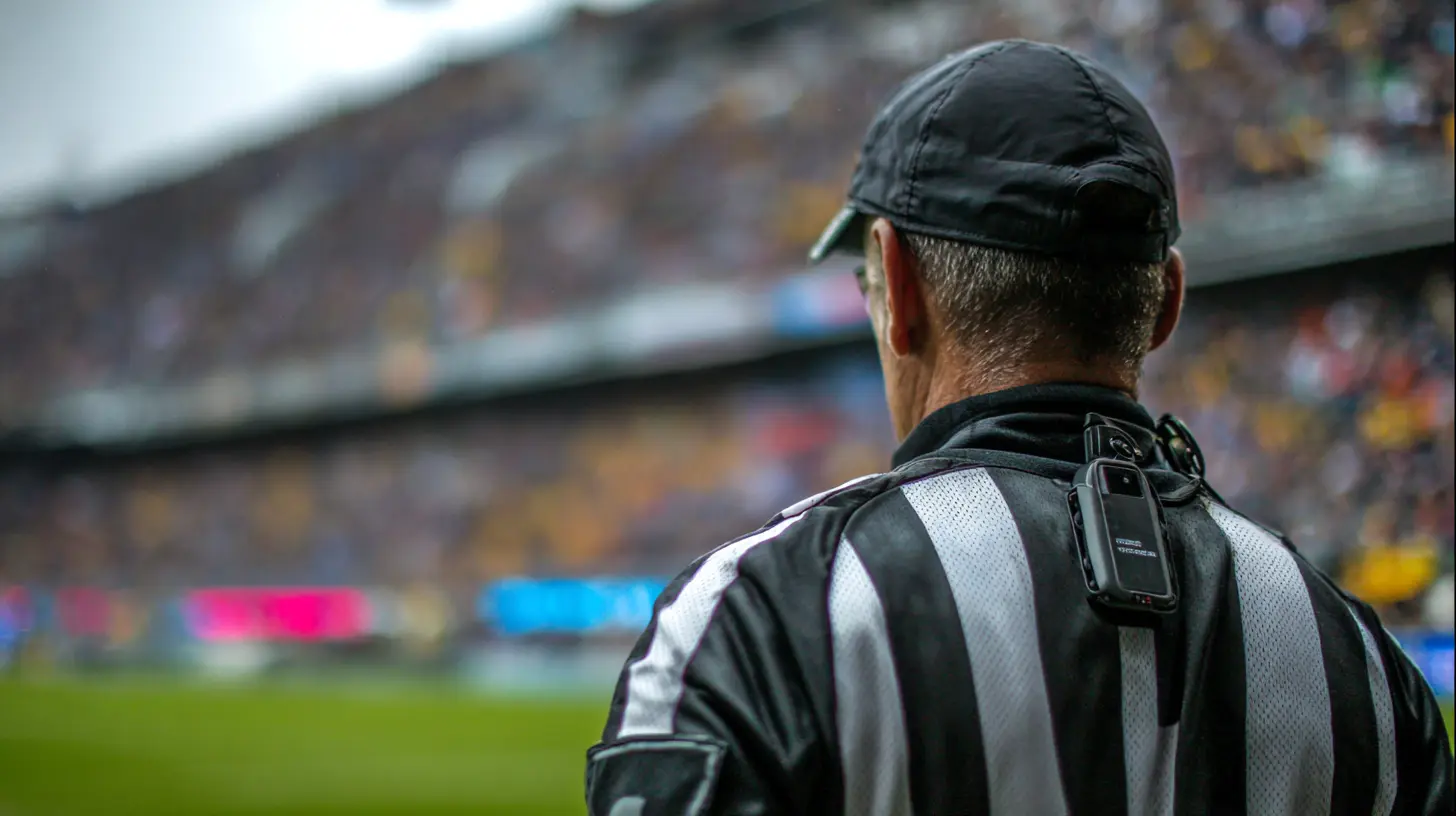
The Core Problem VAR Was Built to Solve
Refereeing has always been a job with an impossible error rate. A top-level match moves fast. Players are faster than they have ever been. The gap between a correct call and a catastrophic one can be a few centimeters or a fraction of a second. Before video review, referees had no safety net. A wrong decision in a cup final could define a career, a season, or a club's financial future.VAR was introduced to reduce those clear and obvious mistakes. The governing bodies behind the major competitions framed it as a corrective tool, not a replacement for the on-field referee. That distinction matters enormously, and it is one of the most commonly misunderstood aspects of how the system works. VAR does not make the decision. It recommends that the referee take another look or confirms that the original call was correct.
This is where public perception and operational reality often diverge. Fans see a screen, a pause, and a decision that feels like it came from somewhere else. In practice, the referee remains the final authority. The system is designed to keep human judgment at the center. Whether that design holds up under pressure is a different question, and it is one that will define the next few years.

Why the Timeline Points to 2027
The reason 2027 matters is not a single event. It is the accumulation of several forces converging at once. First, the technology is maturing. Semi-automated offside systems, which use multiple cameras and limb-tracking to generate a decision far faster than manual line-drawing, are already in use in some competitions and are being rolled out more widely. Second, the rules themselves are under review. The International Football Association Board, which governs the laws of the game, continues to test adjustments to how VAR is applied, including how long reviews should take and what counts as a clear error.Third, and perhaps most importantly, a generation of players, coaches, and referees is now growing up with VAR as a normal part of the sport. The players who came through academies in the late 2010s have never known a professional match without it. That generational shift changes behavior. Players no longer celebrate a goal with the same abandon, because they have learned to glance at the assistant referee or wait for the check. Coaches have built tactical plans around the knowledge that certain fouls will be reviewed. Referees have developed new communication habits.
By 2027, these threads will have woven together into something that looks less like an experiment and more like a permanent feature of the sport. The question is not whether VAR stays. It is what kind of VAR we end up with.
The Real Changes Nobody Talks About Enough
Most coverage of VAR focuses on the big moments: a disallowed goal, a penalty awarded after a long delay, a red card overturned. Those moments are dramatic, but they are not where the deepest changes are happening. The most significant effects are quieter and more structural.How Defending Has Changed
Defenders now play with a different kind of awareness. The offside trap, once a high-risk high-reward tactic, has become more precise because players know the margin will be measured exactly. Some defenders have adjusted by holding their line a fraction later. Others have abandoned the trap altogether in favor of deeper blocks. The trade-off is real. A perfectly timed trap can spring an attack and create a goal-scoring chance. A mistimed one now carries almost no chance of escaping review.This has produced a subtle tactical split. Teams that trust their discipline still use the trap. Teams that do not have shifted toward zonal marking and compact defensive shapes. Neither approach is universally better. It depends on the personnel, the opponent, and the scoreline. What has changed is that the decision is now made with far more information about the consequences.
How Attacking Runs Are Timed
Strikers have adapted too. The art of the perfectly timed run has always been about fractions. Now it is about fractions that will be verified. Some forwards have learned to delay their run by a beat, accepting that they may lose a step of pace but gain certainty that they will not be flagged. Others have gone the opposite way, gambling on the fact that the review may take long enough to be inconclusive.This is one of the most interesting psychological shifts in the modern game. Players are not just playing against the opponent. They are playing against the review process itself. That is a strange thing to type, but it is true, and it will only become more pronounced as the technology gets faster.
How Coaches Manage Games
Coaches have always managed games through substitutions, tactical shifts, and touchline behavior. VAR has added a new layer. Some coaches now plan for the possibility of a review the way they plan for a set piece. They know that a goal may be chalked off, so they prepare their team to reset emotionally. They know that a penalty decision may take several minutes, so they use that time to reorganize.The best coaches treat VAR as a variable, not an obstacle. They accept that it will sometimes help and sometimes hurt. Their job is to make sure the team is mentally ready for either outcome. That is a skill that did not exist in the same form twenty years ago, and it is now part of the job.

The Communication Problem
If there is one area where VAR has consistently fallen short, it is communication. The decision may be correct, but if nobody in the stadium understands why it took four minutes, the correctness does not matter. Fans experience the delay as confusion. Players experience it as uncertainty. The referee, who may have made the right call, ends up looking indecisive.This is where the biggest improvements are likely to come before 2027. Several competitions have experimented with live audio of the referee explaining the decision to the crowd. Others have tested in-stadium replays that show the same angles the VAR team is reviewing. The early results suggest that transparency reduces frustration, even when the decision goes against the home team.
The lesson is straightforward. People can accept a decision they disagree with. They struggle to accept a decision they cannot understand. Any competition serious about VAR should treat communication as a core part of the system, not an afterthought.
Common Misconceptions About VAR
A few myths have taken hold, and they are worth correcting because they shape how people judge the system.The first is that VAR is supposed to eliminate all errors. It is not. The stated goal is to correct clear and obvious mistakes. Subjective calls, like whether a challenge was reckless or whether a handball was deliberate, will always involve interpretation. VAR reduces the frequency of egregious errors. It does not produce perfection, and no system can.
The second is that VAR is controlled by a single person or a single room. In reality, it involves a team of officials, each with a specific role. The lead VAR, the assistant VAR, and the replay operator all contribute. Understanding this helps explain why some reviews take longer than others.
The third is that VAR is the same everywhere. It is not. Different leagues and competitions apply the same laws with different thresholds and different levels of tolerance. A challenge that triggers a review in one league might not in another. This inconsistency frustrates fans, but it reflects the fact that the laws leave room for interpretation, and different governing bodies interpret them differently.
The Trade-Offs That Will Define the Next Phase
Every design choice in VAR involves a trade-off. Speed versus accuracy. Consistency versus flexibility. Transparency versus the risk of undermining the referee's authority. There is no version of VAR that maximizes all of these at once.Consider the offside rule. A strict interpretation, measured to the millimeter, is consistent. It is also widely seen as unfair, because a toe or an armpit can decide a goal. A more lenient interpretation, with a margin of error, feels more natural but introduces a different kind of inconsistency. Two similar plays might produce different outcomes depending on which side of the margin they fall.
There is no perfect answer. The best approach is to pick a philosophy, apply it consistently, and explain it clearly. Fans can live with a rule they disagree with. They struggle with a rule that seems to change from week to week.
What Readers Should Consider Before Forming a Strong Opinion
If you are a fan, a coach, a player, or a referee, it is worth asking a few questions before deciding whether VAR is good or bad for the game.What is the actual error rate without VAR, and how does it compare with the error rate with it? How much delay is acceptable for a correct decision? Is a four-minute review that gets the call right better or worse than a ten-second call that gets it wrong? These are not rhetorical questions. Different people will answer them differently, and that is fine. The point is to argue from evidence rather than from the emotion of a single bad experience.
It is also worth separating the technology from the implementation. VAR as a concept is sound. VAR as it has been rolled out in some competitions has been clumsy. The two are not the same, and conflating them leads to bad conclusions.
Practical Advice for Different Groups
For coaches, the most useful habit is to prepare the team for reviews the way you prepare for any other disruption. Rehearse the reset. Make sure the captain knows how to communicate with the referee. Do not let a disallowed goal turn into a five-minute emotional collapse.For players, the discipline of playing to the whistle matters more than ever. A goal that is scored and then disallowed can be psychologically devastating if the team has already celebrated. Staying focused until the decision is confirmed is a skill worth developing.
For referees, the priority is clarity. Explain the decision, use the technology to support your judgment, and do not let the process make you look uncertain. The referee remains the authority. The system exists to help, not to replace.
For fans, the best approach is patience and a willingness to judge the system over a season rather than over a single match. VAR will produce moments of frustration. It will also produce moments of justice that would have been impossible before.
What Soccer Looks Like in 2027
By 2027, the version of VAR we see will likely be faster, more transparent, and more integrated into the flow of the game. Semi-automated offside decisions will reduce the long waits that have defined the early years. In-stadium explanations will become standard in major competitions. The rules will have been refined through years of trial and error.None of this will make the arguments disappear. Soccer is a sport built on argument, and that will not change. What will change is the nature of the argument. Instead of debating whether a goal was offside, fans will debate whether the rule itself is fair. Instead of questioning whether the referee saw the incident, they will question whether the review process handled it well. The conversation shifts from facts to philosophy.
That is not a small thing. It is a sign that the sport has absorbed the technology and moved on to the harder questions. By 2027, VAR will no longer be a novelty. It will be part of the furniture. The task for everyone involved will be to make sure it serves the game rather than the other way around.
all images in this post were generated using AI tools
Category:
Game Rules ExplainedAuthor:

Onyx Frye