The Key Differences Between Softball and Baseball Rules
29 November 2026
Softball and baseball look like cousins at a family reunion. Same field shape, same basic idea of hitting a ball and running bases, same dugout culture. But step onto the field with the wrong rulebook in your head and the differences show up fast. A pitcher who crow hops in baseball is fine; in softball that same motion is an illegal pitch. A runner who leaves early in baseball is playing normally; in softball she is out. A coach who manages a baseball bullpen by feel will mismanage a softball pitching staff badly, because the workload math is completely different.
This article breaks down the rule differences that actually matter, why they exist, and how players, coaches, umpires, and fans should adjust. It covers the pitching motion, base running, field dimensions, equipment, substitution rules, the runner re-entry rules in fastpitch, game length, and the safety rules that have diverged most sharply in recent years. Where the two sports share a rule, I will say so briefly and move on. The value is in the gaps.

Why the Rules Diverged in the First Place
Softball was not invented as a softer version of baseball. It grew out of indoor and recreational play in the late 1800s, and the original constraints shaped everything that followed. A smaller playing area, a larger ball, and an underhand pitch were practical choices for indoor play and for recreational leagues. Those constraints hardened into rules.Baseball evolved around overhand pitching, a longer throw from the mound, and a smaller ball that travels farther. The rules grew to protect the integrity of the pitcher-hitter duel and to keep the game moving across nine innings.
The result is two rulebooks that share vocabulary but not logic. When a rule seems strange in one sport, the explanation is almost always found in the other sport's history. Understanding that history prevents a lot of bad coaching.

Pitching Rules: The Biggest Practical Divide
The Delivery
Baseball allows overhand, three-quarter, and sidearm deliveries. The pitcher must come to a set position with the ball in both hands, then may throw in one continuous motion. The mound gives the pitcher a downhill advantage, and the rules around balks govern deception once runners are on base.Softball requires an underhand delivery. In fastpitch, the rules govern the arc of the arm, the position of the wrist relative to the hip at release, and whether the pivot foot stays in contact with the pitcher's plate. A leap, a crow hop, or a drag that breaks contact improperly is an illegal pitch. The penalty is a ball to the batter, and with runners on base the runners advance.
Why does this matter beyond mechanics? Because the two motions create different injury profiles and different coaching priorities. Baseball pitchers build arm speed through external rotation and shoulder loading. Softball pitchers generate velocity through hip rotation, a whip-like arm circle, and ground reaction forces. A coach who trains a softball pitcher with baseball throwing drills will build the wrong movement pattern and risk injury.
Workload and Rest Rules
Baseball has layered rest rules at every level. High school associations, the NCAA, and professional leagues all cap pitches or innings and mandate rest days. These rules exist because overhand throwing at high intensity produces measurable shoulder and elbow stress, and the research on youth pitching injuries is extensive.Softball rules vary far more by governing body. Some youth and high school codes limit innings or appearances; many do not impose pitch counts at all. The underhand motion is generally considered lower risk for the shoulder and elbow, though it is not risk-free, particularly for the lower back and hip.
Practical advice: do not assume softball pitchers can throw unlimited innings just because the rulebook permits it. The absence of a pitch count is a gap in the rules, not a medical clearance. Smart coaches track volume, monitor mechanics under fatigue, and build rest into the plan even when no rule requires it.
The Balk
Baseball has a balk rule. Softball does not. There is no balk in fastpitch or slowpitch. Illegal pitches exist, but they concern the delivery itself, not deception with runners aboard. A baseball coach moving to softball must unlearn the balk instincts entirely. A softball umpire moving to baseball must learn a rule with no analog in her original sport, and the balk is one of the hardest calls in baseball to make consistently.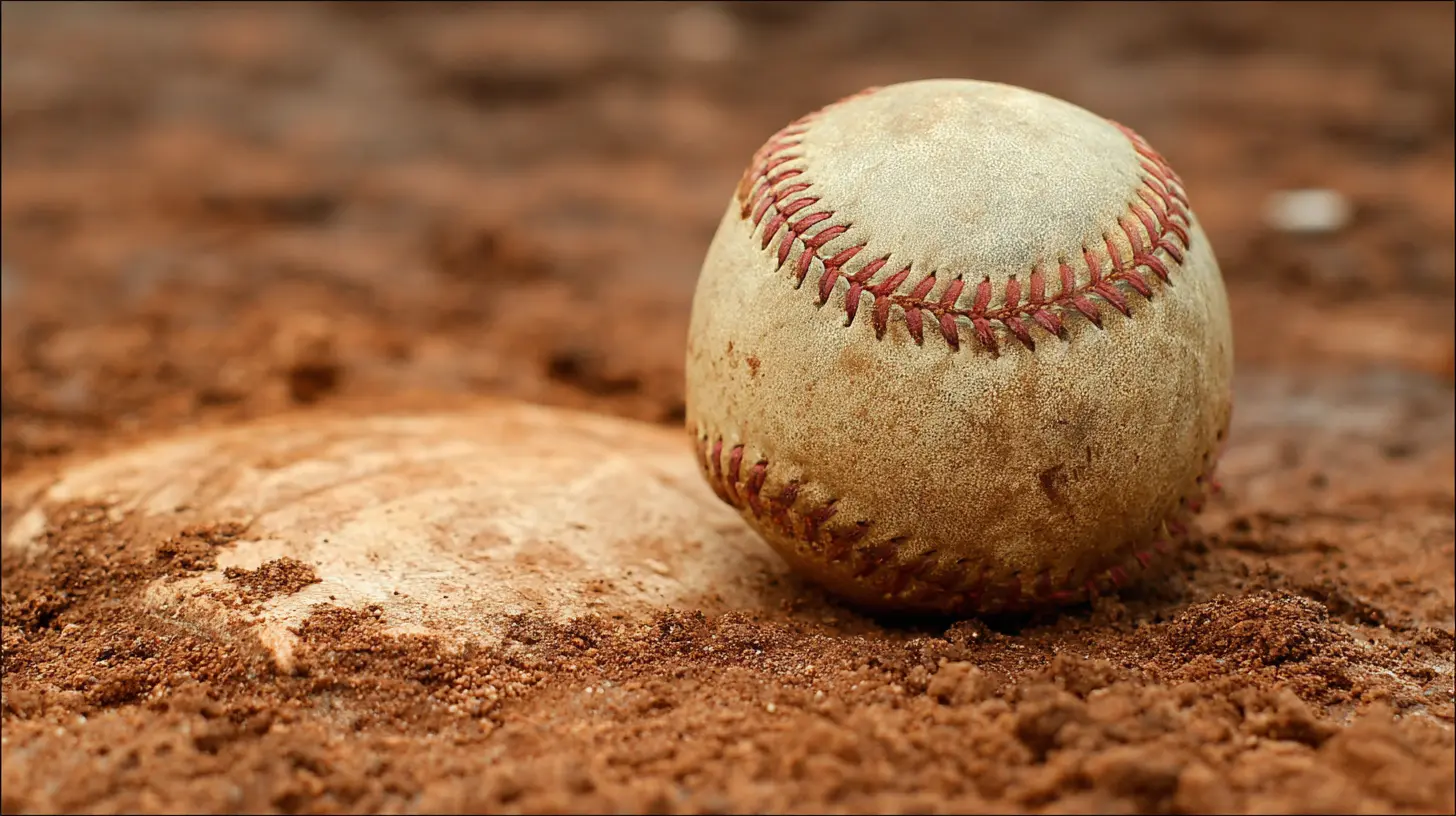
Base Running Rules
Leading Off and Stealing
This is the cleanest difference in the entire rulebook.In baseball, runners may lead off once the pitcher starts the motion, and stealing is a core part of the game. In fastpitch softball, runners may not leave the base until the ball leaves the pitcher's hand. Leave early and you are out. The penalty is immediate and non-negotiable.
Slowpitch takes it further in most codes: no leading off, no stealing, and sometimes no leaving the base until the ball is hit.
The strategic consequences are enormous. Softball base running is about reaction time, first-step quickness, and reading the ball off the bat. Baseball base running is about reading the pitcher, timing the move, and exploiting a delivery. A fast softball runner can still steal, but she does it on the release, not on the pitcher's leg kick. Coaches who train baseball lead-off technique with softball players are wasting reps and creating outs.
Sliding Rules
Both sports require runners to avoid malicious contact and to slide or veer away from a fielder making a play. The details differ.Baseball has a defined slide rule at second base on double-play attempts, and interference rules that penalize slides outside the baseline or contact above the knee. Softball codes have similar protections, and fastpitch in particular has tightened rules around the collision at home plate and at the pivot on the double play.
One practical difference: in softball, the larger ball and shorter bases make collisions happen faster and with less reaction time. Umpires in fastpitch are trained to look for obstruction and interference aggressively, because the margin for error is smaller. Coaches should teach sliding technique as a safety skill, not just a competitive one.
The Courtesy Runner
Fastpitch softball commonly allows a courtesy runner for the pitcher or catcher. The runner is usually a player who has not yet entered the game, and she runs without counting as a substitution. Baseball has no equivalent.This rule exists for pace of play and for catcher safety. A catcher who has just squatted for a half inning does not need to sprint the bases and then squat again. Coaches should plan the courtesy runner into the lineup card before the game, not scramble for one mid-inning. A common mistake is burning a bench player as a courtesy runner and then discovering that player was needed as a pinch hitter later.
The Designated Player and Re-entry Rules
Baseball uses the designated hitter in most amateur and professional codes, and the DH does not play defense. Substitution rules are strict: once a player leaves the game, she cannot return.Fastpitch softball uses a different system in most codes: the designated player, often called the DP, paired with a flex player. The DP bats for the flex, who plays defense. The two can be used together in the batting order, and the rules allow the DP and flex to swap roles in limited ways without counting as a substitution, provided the change is reported properly.
On top of that, many youth and high school softball codes allow a starter to re-enter the game once. Baseball does not allow re-entry at most levels.
Why does this matter? Because lineup management in softball is a different puzzle. A coach can pull a slumping starter, let her reset, and put her back in later. That flexibility changes how you handle pitching changes, defensive replacements, and pinch hitters. It also creates bookkeeping traps. Misreport a DP-flex change and you can lose the DH or create an out. Keep a written lineup card and confirm every change with the umpire.
Field Dimensions and Equipment
Distances
Baseball bases are 90 feet apart, and the pitching distance is 60 feet 6 inches. Softball infields are 60 feet between bases in fastpitch, with a pitching distance of 43 feet in college and most high school play, and 40 feet in some youth codes. Slowpitch uses 65-foot bases and a pitching distance around 50 feet in most adult codes.The shorter bases change everything. A fastpitch infielder has less reaction time and must play closer to the batter. A first baseman holds a runner differently. A double play turns faster. A ground ball that is a routine out in baseball can be a hit in softball, and vice versa depending on the level.
The Ball
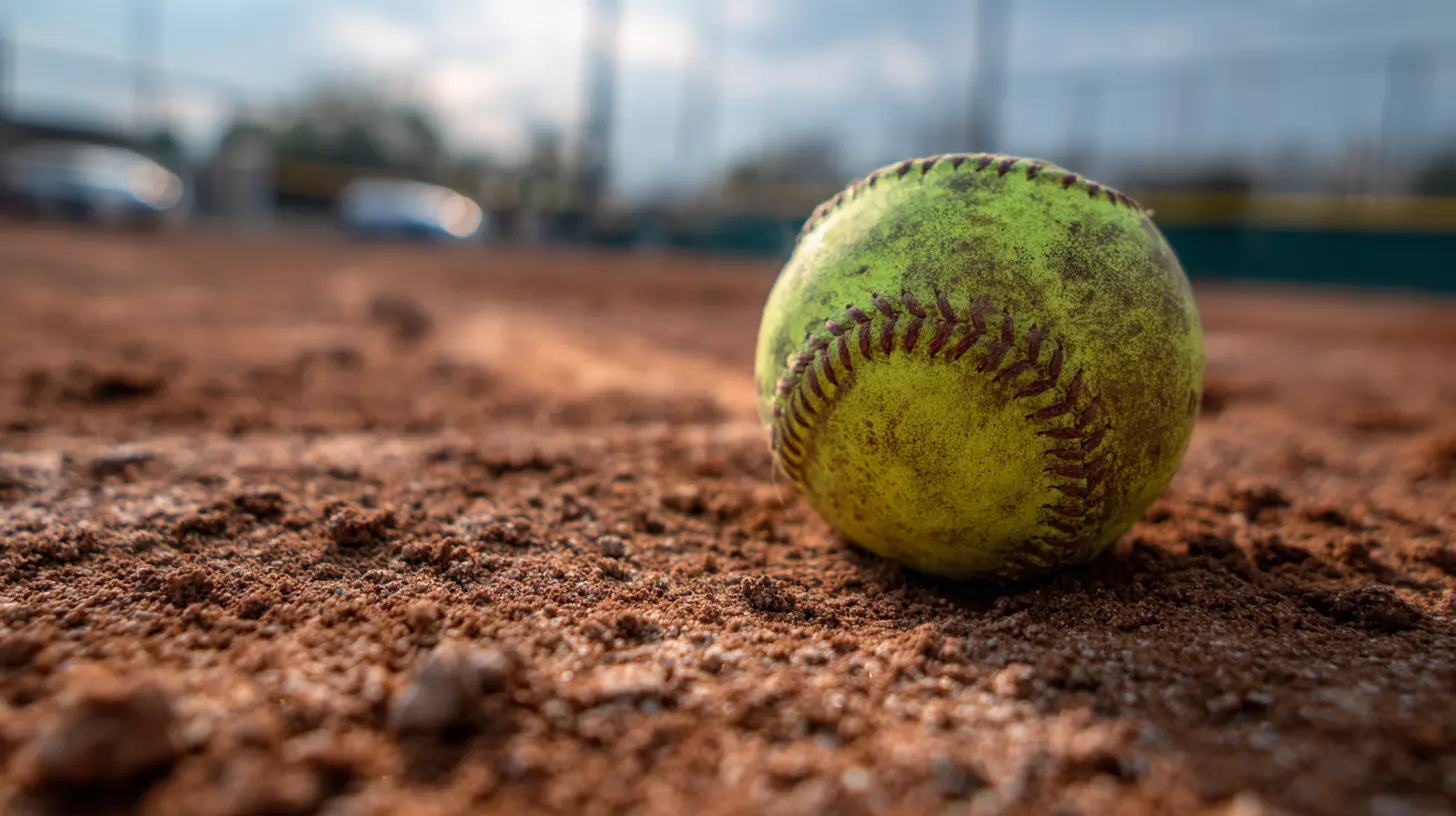
A baseball is roughly 9 to 9.25 inches in circumference and weighs about 5 to 5.25 ounces. A fastpitch softball is 12 inches in circumference and weighs about 6.25 to 7 ounces. Slowpitch softballs are 12 or 16 inches depending on the code.The larger, heavier ball does not travel as far off the bat at the same swing speed, which is one reason softball outfields are smaller. It also changes how fielders catch and transfer. A softball infielder uses a larger glove and a different transfer path. Teaching a baseball infielder to play softball requires adjusting glove size, hand position, and the speed of the exchange.
Bats
Baseball bats are governed by certification standards that vary by level, including BBCOR for college and high school, USA Baseball for youth, and wood in professional play.Softball bats are certified separately, with ASA/USA, USSSA, and NSA standards among the most common. The key practical point: a bat legal in one code may be illegal in another, and the certification stamp is what matters, not the brand or the price. Coaches should verify stamps before every season, because the rules are updated on a rolling basis and an older bat can become illegal.
Game Length and Timing Rules
Baseball plays nine innings at professional and most college levels, seven in many high school and youth codes.Softball commonly plays seven innings in fastpitch and seven in slowpitch, though many recreational and tournament codes use time limits, run rules, or both. The international tiebreaker, which places a runner on second base to start extra innings, is standard in many softball tournaments and increasingly common in baseball as well, but softball adopted it earlier and more broadly.
The run rule, often called the mercy rule, is more aggressive in softball. Many codes end the game when a team leads by a set margin after a set number of innings. Coaches must know the exact rule in their league, because it changes strategy. A team up by eight in the fifth inning may be one swing from ending the game, and a team down by eight may be playing for pride rather than a comeback.
Safety Rules That Have Diverged
Headgear and Face Protection
Baseball requires batting helmets and catcher's gear. Softball requires the same, and fastpitch has moved further on face protection. Many youth and high school codes now require face masks for infielders, and some require them for pitchers as well. The rules vary widely by state association and league.The reason is not that softball is more dangerous in absolute terms. It is that the shorter bases and the larger ball create a different reaction-time problem for corner infielders and pitchers. A third baseman 60 feet from the plate has less time than a baseball third baseman at 90 feet. Face protection is a direct response to that geometry.
The Obstruction and Interference Rules
Both sports penalize obstruction, which is a fielder impeding a runner without the ball, and interference, which is a runner or batter impeding a fielder making a play. The definitions are similar, but the enforcement patterns differ.In fastpitch, obstruction is called more aggressively, particularly at bases where a fielder is blocking the path without the ball. The penalty is typically to award the runner the base she would have reached. Coaches who teach fielders to straddle the base while waiting for a throw are inviting an obstruction call in softball. Teach the fielder to position on the inside corner and to move only when the ball arrives.
Common Misconceptions and Mistakes
Misconception one: softball is just baseball with a bigger ball. Anyone who has watched a college fastpitch game knows this is false. The pitching, the short game, the base running, and the pace are different sports.Misconception two: the rules are basically the same. They share a skeleton, but the differences in pitching, leading off, substitution, and re-entry are not cosmetic. They change strategy, lineup construction, and player development.
Misconception three: softball pitchers can throw every day. No rule may stop them, but smart coaches treat workload as a health issue, not a loophole.
Common mistake: using baseball lead-off drills with softball players. It builds the wrong reflex and produces outs.
Common mistake: ignoring the DP-flex rules until game day. Lineup management is a skill. Practice it in scrimmages.
Common mistake: assuming a bat is legal because it was legal last season. Certification lists change. Check the stamp.
Practical Advice for Coaches Crossing Over
If you are a baseball coach taking a softball job, start with three things. First, learn the pitching rules cold, including the illegal pitch penalties. Second, rebuild your base running instruction around the release, not the lead-off. Third, study the substitution and re-entry rules before you fill out your first lineup card.If you are a softball coach working with baseball players, do the reverse. Teach the balk, teach the lead-off, and teach the value of a strict substitution system. The players will adapt quickly if you explain why the rules exist.
What to Consider Before Choosing a Code
Leagues and governing bodies publish rulebooks, and those rulebooks differ. Before a season starts, confirm which code you are playing under, whether the league uses time limits, whether face protection is mandatory, and whether re-entry is allowed. Do not assume that last year's rules apply. The differences between codes are real, and they affect how you build a roster and plan a season.The bottom line: softball and baseball share a field shape and a spirit, but the rulebooks are distinct systems. Treat them that way and you will coach better, play smarter, and avoid the mistakes that come from assuming the other sport's habits carry over.
all images in this post were generated using AI tools
Category:
Game Rules ExplainedAuthor:

Onyx Frye