Predicting the Next Big Sport in 2027
25 September 2026
Every few years, a sport that most people ignored suddenly shows up on mainstream television, in sponsorship decks, and in conversations between people who previously had no interest in it. Pickleball did it. Mixed martial arts did it. Esports spent a decade promising it before partially delivering. The question is not whether another sport will break through by 2027, but which one, and why.
This is a harder question than it looks. Plenty of sports grow steadily without ever becoming "big." Plenty of others get a burst of media attention and then fade. Predicting the next big sport requires separating genuine structural momentum from hype cycles, and understanding what actually makes a sport scalable in the 2020s and 2020s-adjacent decade: low barriers to entry, short formats that fit streaming, a clear pathway to professional money, and a community that sustains itself without needing a broadcaster's permission.
Below is a reasoned case for the sports most likely to occupy that position by 2027, along with the reasoning, the trade-offs, and the mistakes people make when they try to call this early.

What Actually Makes a Sport "Big"
Before naming candidates, it helps to define the target. A sport becomes big when four things happen at once.First, participation scales cheaply. Pickleball exploded because a court costs little, the learning curve is short, and you can play at 70 or 17. Sports that require expensive facilities, deep coaching, or years of technique before the game is fun tend to stay niche.
Second, there is a watchable professional or semi-professional layer. Participation alone does not create a sport economy. You need spectators, and spectators need a product that works on a screen.
Third, the sport fits modern distribution. That means short matches, vertical-friendly highlights, and a story that a casual viewer can follow in under a minute. Sports that require three hours of context to enjoy struggle on TikTok and YouTube Shorts, which is where most new fans now first encounter anything.
Fourth, there is money flowing in from outside the traditional sports system. Betting markets, streaming platforms, private leagues, and brand sponsors who want younger audiences all accelerate growth. Without external capital, a sport can grow culturally but rarely becomes big in the commercial sense.
Keep those four criteria in mind. They explain why some obvious candidates are weaker than they look, and why some overlooked ones are stronger.
The Strongest Candidate: Flag Football
If you want the single most defensible prediction for 2027, it is flag football, specifically the non-contact version played at speed with five or seven players per side.The reasoning is straightforward. Flag football inherits the cultural gravity of American football without inheriting its biggest liability: head trauma. Parents who have quietly decided their kids will not play tackle football are still happy to sign them up for flag. That single dynamic is reshaping youth sports participation across North America, and it compounds every year as more families make that choice.
The professional layer is also arriving. The NFL has invested in flag football through its international and youth programs, and flag has been added to the Olympic program for Los Angeles 2028. That Olympic inclusion is the key mechanism. Nothing accelerates a sport's global spread faster than a Games debut, because national federations suddenly have a reason to fund teams, and broadcasters suddenly have a reason to care.
Why does this work when other football alternatives failed? Because flag football solves the format problem. Games are short. Rosters are small. The field is smaller. It translates to television and to short-form video far better than arena football ever did. It also has a genuine international footprint already, with strong participation in Mexico, Japan, and parts of Europe, which matters for Olympic legitimacy.
The trade-offs are real. Flag football's professional leagues are still fragile, and the sport risks being seen as a youth activity rather than a spectator product. The NFL's involvement is a double-edged sword: it brings money and attention, but it also means the sport's identity is tied to a much larger entity that could deprioritize it. If you are evaluating flag football as an investment or a business opportunity, watch the professional leagues closely, not just the youth numbers.
The Sleeper: Padel
Padel is often described as a mix of tennis and squash, played in an enclosed court with walls you can use. It has been huge in Spain, Argentina, and Mexico for years, and it is now spreading fast across Europe, the Middle East, and parts of the United States.The case for padel is participation economics. It is easier to learn than tennis, more social than squash, and the enclosed court makes for long, entertaining rallies that look good on video. Courts are cheaper to build than tennis courts in many urban settings because they take less space, and clubs can monetize them heavily through bookings, coaching, and social leagues.
Why might padel be the next big sport by 2027 rather than later? Because the infrastructure is being built right now. Private investors are funding court construction at a pace that suggests they expect demand to hold. When capital builds physical infrastructure, the sport usually follows.
The honest caveats matter here. Padel's growth is uneven. It is booming in some markets and stalling in others. It also faces a ceiling: the professional tour is still less lucrative and less visible than tennis, and the sport's biggest stars are not yet household names outside padel countries. Padel may become very big as a participation sport without becoming big as a spectator sport. Those are two different outcomes, and people conflate them constantly.
If you are a club owner or investor, padel is the most actionable opportunity on this list. If you are a broadcaster, it is less obvious.

The Wildcard: Teqball
Teqball is played on a curved table, combining elements of football and table tennis. It sounds gimmicky until you watch it. The rallies are fast, the skill ceiling is absurd, and the sport has a genuine competitive circuit with world championships.The reason teqball belongs in this conversation is that it fits the modern attention economy almost perfectly. Matches are short. The equipment is cheap and portable. The highlight reel is instantly understandable even if you have never seen the sport. And it has attracted investment from figures connected to football, which gives it credibility in markets where football is religion.
The risk is that teqball remains a novelty. Sports built around a single piece of equipment and a viral clip often plateau once the novelty fades. The question for 2027 is whether teqball can build a deep enough competitive pyramid, from amateur to elite, that it stops being a curiosity and becomes a pathway. If it can, it may be the most surprising entry on this list. If it cannot, it will be remembered as a sport that had a moment.
The Format That Wins: Short, Vertical, and Betting-Friendly
Step back from individual sports and look at the pattern. The sports rising fastest share three traits: they are short, they are visually legible on a phone, and they work for betting.Short matters because attention is the scarce resource. A sport that can be consumed in ten-minute chunks competes for the same slot as a YouTube video, and it can win. A sport that demands a three-hour commitment competes with sleep.
Vertical matters because that is how discovery happens now. A sport with continuous action that fits a phone screen has a structural advantage over one that requires a wide field and long periods of low activity.
Betting matters because it brings liquidity and engagement. Whether you find that appealing or not, betting markets fund coverage, drive viewership, and create the kind of daily engagement that sponsors pay for. Sports that are hard to bet on, because outcomes are slow or scoring is opaque, grow more slowly.
This is why flag football and padel look stronger than, say, a new racket sport with a complicated scoring system, or a team sport that requires a full stadium to make sense. The format is not a detail. It is often the deciding factor.
Common Mistakes When Predicting Sports Growth
People get this wrong in predictable ways.The first mistake is confusing participation growth with spectator growth. A sport can have millions of casual players and almost no audience. Golf and bowling are examples of sports with huge participation and inconsistent spectator appeal. When you read that a sport is "the fastest growing in America," check whether that means players or viewers. They are different businesses.
The second mistake is assuming a viral moment equals a trend. A clip can spike interest for a month. A trend requires retention, which requires a pathway: a place to play, a league to follow, a reason to come back. Without infrastructure, virality is a sugar high.
The third mistake is ignoring the Olympic cycle. Olympic inclusion is one of the few reliable accelerators in global sport. If a sport is added to a Games program, its federation, funding, and media coverage change within a two-year window. Flag football's inclusion for 2028 is the clearest example, and it is already pulling forward investment ahead of 2027.
The fourth mistake is underestimating the role of private capital. Sports do not grow on passion alone at scale. They grow when someone builds courts, pays athletes, and sells tickets. Follow the money, not the memes.
How to Evaluate Any Contender Yourself
If you want to make your own call, use a simple framework.Ask who can play it. If the answer is "anyone with a pair of shoes and a nearby court," that is a strong signal. If the answer is "athletes who started at six," it is a weak one.
Ask who can watch it. Watch a random five minutes with no context. If you can tell who is winning and why, the sport is broadcast-ready. If you cannot, it needs a commentary layer that most casual viewers will not sit through.
Ask who pays for it. Identify the revenue sources: tickets, media rights, sponsorship, betting, merchandise, or participation fees. A sport with only one revenue source is fragile. A sport with several is resilient.
Ask what could kill it. For flag football, it is a safety scare or NFL disengagement. For padel, it is oversupply of courts and a collapse in booking demand. For teqball, it is novelty fatigue. Naming the failure mode keeps you honest.
What to Actually Do With This Prediction
If you are a fan, the practical move is to pick one of these sports and follow it at the amateur level first. That is where you will see whether the growth is real. Local leagues, club openings, and youth registrations are leading indicators. Television coverage is a lagging one.If you are a businessperson, padel offers the clearest near-term opportunity because it is infrastructure-driven and monetizes participation directly. Flag football offers the clearest long-term upside because of the Olympic runway and the NFL's involvement. Teqball is the highest-risk, highest-variance bet.
If you are a content creator or media person, the play is to become the definitive voice in one of these sports before the mainstream arrives. The window is roughly 2025 to 2027. After that, the big platforms will have hired their own people, and the early-mover advantage closes.
The Bottom Line
The next big sport in 2027 is most likely flag football, with padel as the strongest participation-side challenger and teqball as the genuine wildcard. The reasoning is not that these sports are the most exciting. It is that they fit the structural conditions that determine which sports scale: low barriers to entry, short watchable formats, external capital, and in flag football's case, an Olympic catalyst.Predictions like this are probabilistic, not certain. A single rule change, a safety controversy, a failed league, or a surprise viral moment can shift the outcome. But if you understand the mechanics rather than just the headlines, you will spot the real trend earlier than most, and you will know why it is happening instead of just that it is.
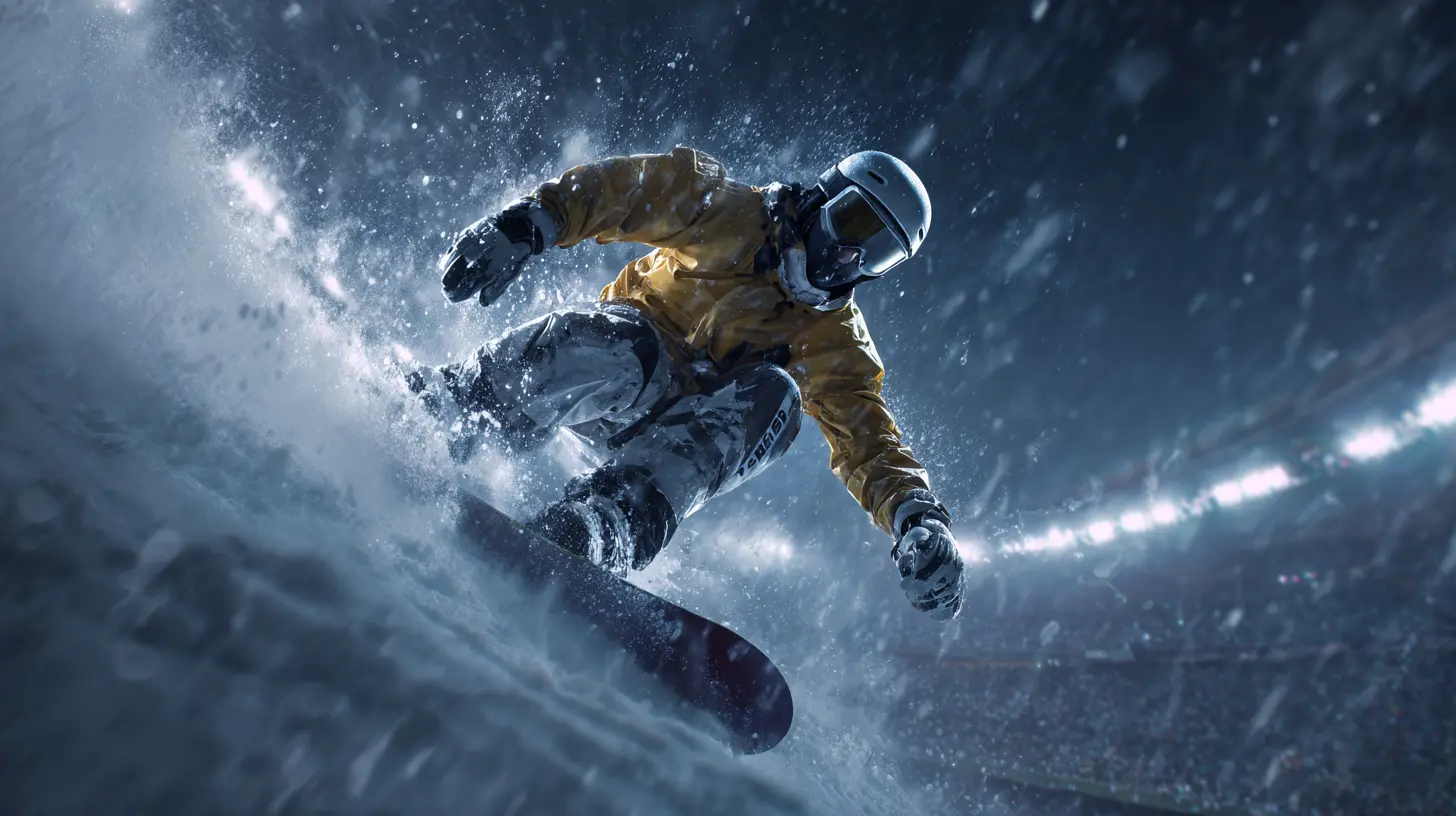
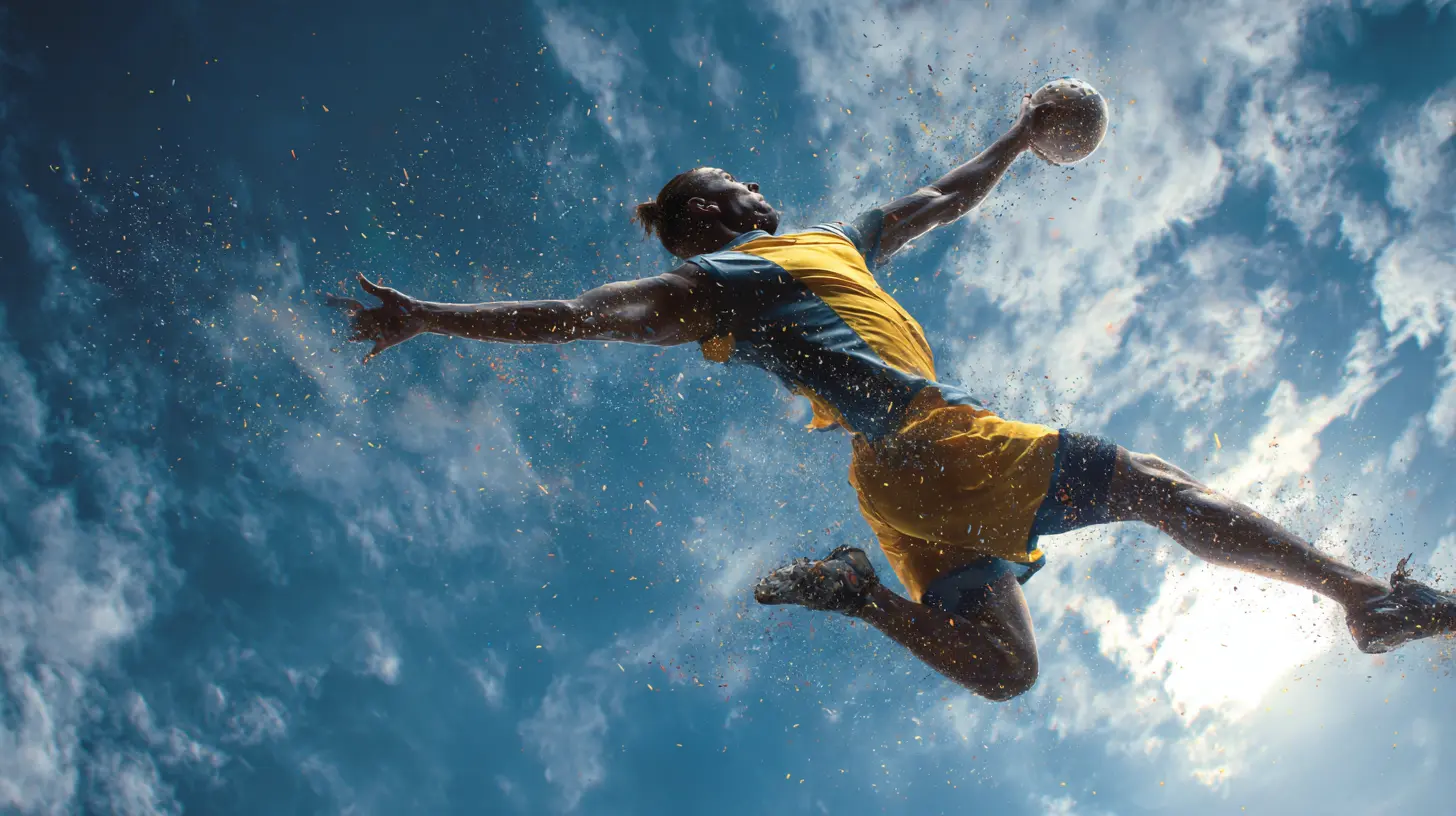
all images in this post were generated using AI tools
Category:
Extreme SportsAuthor:

Onyx Frye