How the Shot Clock Affects Strategy in Basketball
16 November 2026
The shot clock is one of the most crucial elements in basketball, shaping not just the pace of the game but also the strategies employed by teams. Introduced in the 1954-55 NBA season, the shot clock was designed to eliminate stalling and promote a faster, more exciting style of play. Understanding how the shot clock affects strategy is essential for players, coaches, and fans alike. This article will delve into the various dimensions of the shot clock, its implications for team strategy, and how it influences decision-making on the court.
The Basics of the Shot Clock
Definition and Purpose
The shot clock is a timer that counts down from a set number of seconds, typically 24 seconds in the NBA, within which a team must attempt a shot. If a team fails to shoot within this timeframe, they lose possession of the ball. The primary purpose of the shot clock is to encourage offensive play and prevent teams from stalling the game by holding onto the ball without making an attempt.Historical Context
Before the shot clock was implemented, teams could hold the ball for extended periods, leading to low-scoring games that lacked excitement. The introduction of the shot clock transformed basketball, making it a more dynamic and fast-paced sport. This change not only affected how teams played but also how they strategized.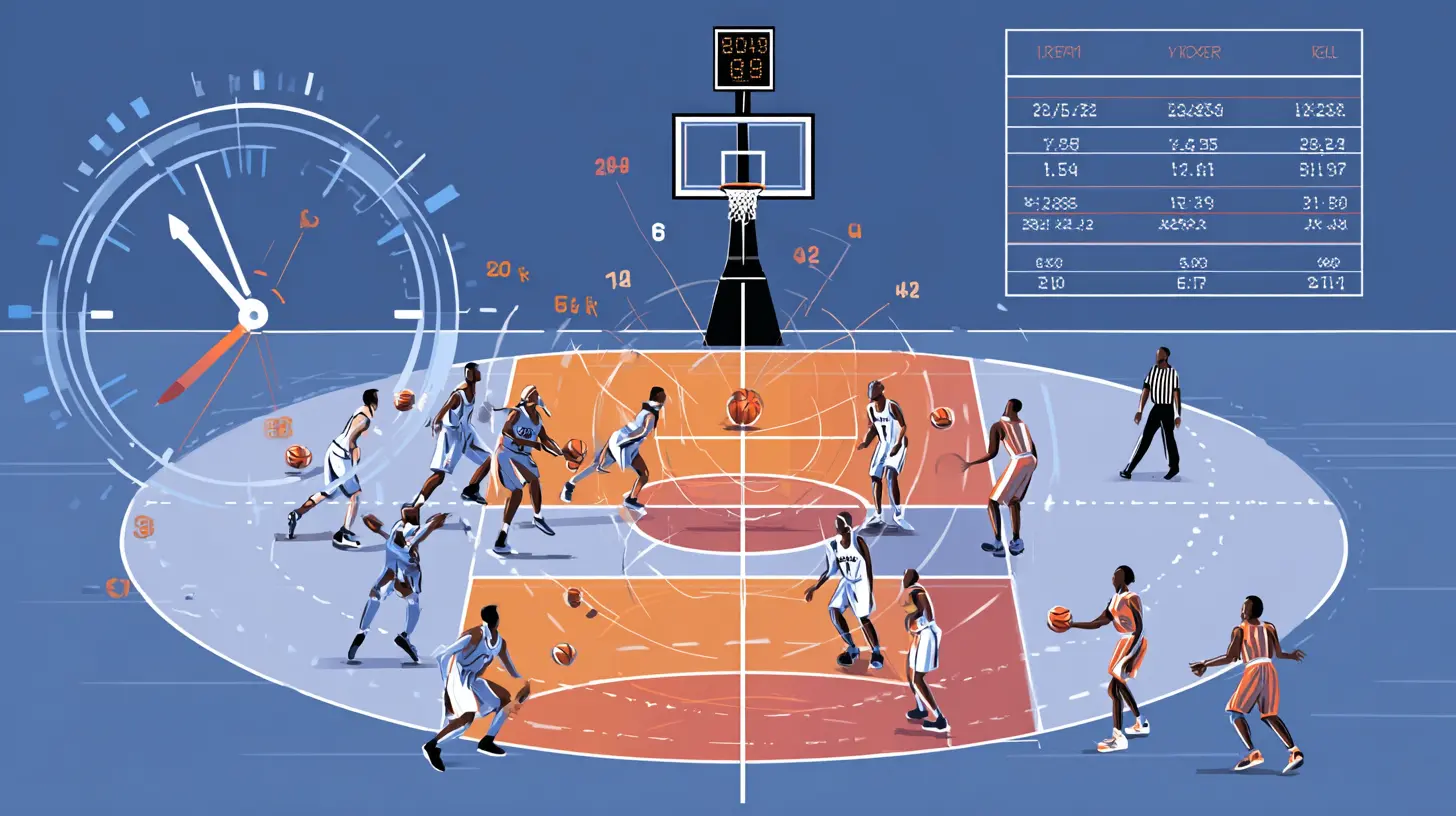
The Impact of the Shot Clock on Team Strategy
Offensive Strategies
Quick Scoring vs. Controlled Offense
Teams must decide whether to prioritize quick scoring or to run a more controlled offense that utilizes the entire shot clock. Quick scoring strategies often involve fast breaks or immediate three-point attempts, aiming to capitalize on defensive lapses. On the other hand, a controlled offense seeks to create high-quality shot opportunities, often involving ball movement and player rotations to find the best look.Real-World Example: Consider the Golden State Warriors, known for their fast-paced style and reliance on three-point shooting. Their offensive strategy often involves pushing the ball up the court quickly and taking a shot within the first few seconds of the shot clock. This approach can catch defenses off-guard, leading to easy baskets.
Late-Game Situations
The shot clock takes on heightened importance in late-game situations. Teams trailing in the score must balance the urgency of scoring quickly with the need for smart shot selection. This often leads to a shift in strategy, where teams may opt for quick shots or intentionally foul to stop the clock.Common Mistake: A frequent error in these scenarios is rushing shots without considering the quality of the attempt. A hasty three-pointer that misses can lead to a fast break for the opposing team, worsening the situation.
Shot Selection and Efficiency
The shot clock forces teams to be more selective in their shot choices. With a limited time to shoot, players must weigh the risk and reward of their attempts. High-percentage shots, such as layups or open jumpers, become more valuable than contested shots.Best Practice: Teams should prioritize shots taken within the rhythm of their offense. Players should be trained to recognize good shot opportunities based on the defense's positioning and their own team's spacing.
Defensive Adjustments
Defensive Pressure
The shot clock influences defensive strategies as well. Teams may employ full-court presses or aggressive half-court traps to force the offense into hurried decisions. This can disrupt the rhythm of the opposing team and lead to turnovers.Trade-off: While applying intense pressure can force mistakes, it can also leave defenders vulnerable to quick passes or fast breaks if the offense breaks the press effectively. Teams must find a balance between aggression and maintaining their defensive structure.
Shot Clock Awareness
Defensive players need to be acutely aware of the shot clock, especially in the closing moments of a quarter or game. Understanding the time remaining can dictate how aggressively they defend. For instance, with only a few seconds left on the shot clock, defenders might play tighter on shooters while still being cautious of driving lanes.
The Role of Coaching
Game Management
Coaches play a pivotal role in how the shot clock affects strategy. They must make real-time decisions about when to call timeouts, when to substitute players, and how to adjust offensive and defensive strategies based on the shot clock.Example: In tight games, a coach might choose to use a timeout to draw up a play when the shot clock is winding down. This can help ensure that the team gets a high-percentage shot rather than a rushed attempt.
Player Development
Coaches also have the responsibility of developing players' understanding of the shot clock. Players must be trained not only to be aware of the time but also to make quick decisions under pressure. This involves situational drills that simulate end-of-game scenarios.Misconception: Many players believe that simply knowing the shot clock is enough. In reality, understanding how to use it strategically is crucial. Players should be taught to recognize when to push for a shot and when to hold for a better opportunity.
The Psychological Aspect of the Shot Clock
Pressure Situations
The shot clock adds a psychological element to the game. Players often feel the pressure of the clock, which can lead to rushed decisions and mistakes. Understanding how to manage this pressure is key for players, especially in high-stakes situations.Recommendation: Mental conditioning and practice under pressure can help players improve their decision-making skills. Techniques such as visualization and breathing exercises can help players stay calm and focused during critical moments.
Team Chemistry
A well-coordinated team can mitigate the pressure of the shot clock. Players who have developed strong chemistry are more likely to trust each other to make the right decisions quickly. This trust allows for smoother ball movement and better shot selection.Actionable Tip: Coaches should encourage open communication and teamwork in practice. Drills that emphasize passing and working together can foster this chemistry, helping teams perform better under the constraints of the shot clock.
The Evolution of the Shot Clock
Changes Over Time
The original 24-second shot clock has seen minimal changes since its inception, but variations exist in different leagues. For instance, the NCAA uses a 30-second shot clock, which alters the pace and strategy of college basketball compared to the NBA.Comparison: The longer shot clock in college basketball allows for more deliberate offensive sets, while the NBA's shorter clock fosters a faster pace. This difference influences player development, as players in college may have more time to refine their skills before entering the NBA.
Future Considerations
As the game evolves, discussions about the shot clock continue. Some analysts suggest that reducing the shot clock to 14 seconds after an offensive rebound could further speed up the game and encourage more scoring opportunities.Consideration: Any change to the shot clock would require careful consideration of how it would affect game flow, strategy, and player development. Stakeholders must weigh the potential benefits against the traditions of the game.
Conclusion
The shot clock is a fundamental aspect of basketball that significantly influences strategies on both offense and defense. Understanding its implications allows teams to make informed decisions that can lead to greater success on the court. Whether it is through quick scoring or controlled offense, the shot clock demands players and coaches to think critically and adapt their strategies in real time.In essence, mastering the shot clock is about more than just knowing the time. It requires a deep understanding of game dynamics, player psychology, and strategic planning. Teams that excel are those that can effectively integrate the shot clock into their overall game strategy, leading to better performance and, ultimately, more victories.
all images in this post were generated using AI tools
Category:
Game Rules ExplainedAuthor:

Onyx Frye