What It Takes to Stay on Top in Competitive Sports
27 August 2026
Let's cut the romantic nonsense right now. Staying on top is not about loving the game. It is about surviving the game after the love has turned into a cold, calculated grind. Anyone can have a breakout season. A rookie can catch lightning in a bottle, a veteran can have one last glorious run, and a team can overperform for six months. But staying on top? That is a completely different animal. It is a war of attrition fought in the gym, in the film room, in the kitchen, and mostly in the space between your ears.
The difference between a champion and a one-hit wonder is not talent. Talent gets you to the party. Discipline, paranoia, and a ruthless willingness to reinvent yourself are what keep you there when everyone else is gunning for your head. If you want to know what it actually takes, stop looking at the trophy photos and start looking at the dark circles under the eyes of the athletes who have been there for a decade.
The Myth of the "Natural" and the Reality of Relentless Adaptation
There is a dangerous idea floating around that some athletes are just born to win. Michael Jordan had the genetics, Tom Brady had the frame, Simone Biles had the neuromuscular wiring. That is true, but it is also a trap. Believing in the "natural" is the first step toward complacency, and complacency is the silent killer of dynasties.The truth is that a "natural" advantage is only a starting line. It is the raw material you have to work with, not the finished product. The athlete who stays on top is the one who treats their natural gifts as a baseline and then spends every off-season trying to figure out what their body and mind can do that they have not done yet.
Consider the evolution of a dominant pitcher in baseball. A young fireballer comes up throwing 100 miles per hour. Hitters cannot catch up. He wins twenty games. Then the league gets the film. Hitters adjust their timing. They start sitting on the fastball. Suddenly, that "natural" gift is a liability because it is predictable. The pitcher who stays on top is the one who develops a changeup, then a cutter, then learns to vary his release point. He does not throw harder; he throws smarter. He adapts.
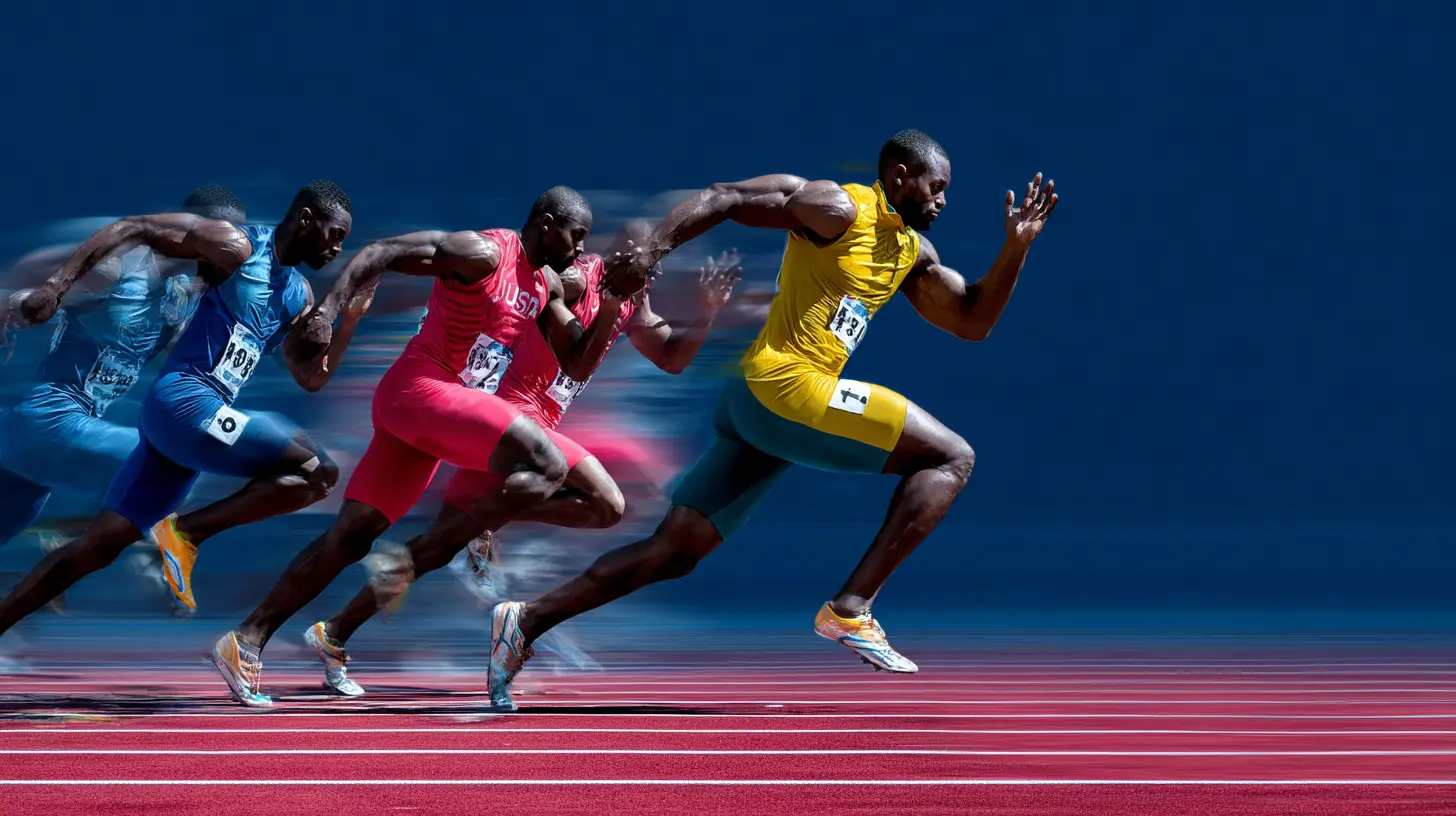
The same applies to every sport. The boxer who relied on knockout power has to develop footwork when his hands slow down. The sprinter who dominated the 100 meters has to change their start technique as their body ages. The soccer player who was the fastest on the pitch has to become the smartest off the ball. Staying on top means you are never the same athlete two years in a row. You are always a new version of yourself, and that new version has to be better than the old one, not just equal.

The Psychology of the Target on Your Back
Here is something nobody talks about enough: the psychological weight of being the favorite. When you are the underdog, you have nothing to lose. You play free. You take risks. The pressure is on the other guy. But when you are on top, the dynamic flips completely. You are expected to win. Losing is not just a defeat; it is a failure of character, a story for the media to chew on for a week.This is where most athletes crack. They start playing not to lose instead of playing to win. They get tight. They overthink. They worry about protecting their legacy instead of building it. The great ones, the ones who stay on top for years, have a specific mental trick: they treat every single game, match, or race as if it is the first one of their career. They do not allow themselves to think about the streak, the ranking, or the money. They focus on the process, the immediate task, the next play.
This is not just motivational fluff. It is a practical strategy. When you focus on the process, you stay in the present moment. The present moment is the only place where you have control. You cannot control the referee's bad call. You cannot control the weather. You cannot control the fact that your rival is having the game of their life. But you can control your footwork, your breathing, your decision-making on the next possession.
The athletes who fail to stay on top are the ones who get lost in the narrative. They start reading their own press clippings. They start believing that they are invincible. Then, when they finally lose, it shatters their identity. They do not know who they are without the win. The ones who last are the ones who build an identity that is separate from the scoreboard. They are a person who happens to be an athlete, not an athlete who happens to be a person.
The Brutal Economics of Recovery and Rest
There is a pervasive myth in sports culture that more is always better. More training, more reps, more hours in the gym. This is the "grind culture" mentality, and it is responsible for more burned-out careers than any rival athlete ever was.The truth is that recovery is not the absence of training. It is the training. When you lift weights, you are actually tearing muscle fibers. The growth happens during rest, when your body rebuilds those fibers stronger. The same principle applies to the nervous system, the cardiovascular system, and the mental game. If you do not give your body time to adapt, you are just breaking it down without ever letting it rebuild.
Staying on top requires a level of selfishness about your recovery that feels almost antisocial. You have to say no to late nights. You have to say no to extra practice sessions that your coach wants you to do but that you know will push you over the edge. You have to say no to the social events that drain your energy. This is hard because athletes are usually people-pleasers. They want to be seen as tough, dedicated, and willing to do whatever it takes. But the smart ones know that "whatever it takes" includes sleeping ten hours, taking a nap in the middle of the day, and skipping a workout because their body is sending warning signals.
The real experts in this field, the sports scientists and the elite coaches, have moved away from the "no pain, no gain" model. They use heart rate variability, sleep tracking, and subjective wellness scores to determine when an athlete should push and when they should back off. This is not soft. It is strategic. The athlete who is fully recovered is the athlete who can train at maximum intensity. The athlete who is always tired is the athlete who is always mediocre.

The Hidden Role of Nutrition and Body Composition
You cannot out-train a bad diet. That is a cliché, but it is also a biological fact. When you are at the top of your sport, the margin between winning and losing is often less than one percent. That one percent can be the difference between being properly fueled for the fourth quarter and running on empty.Nutrition for a top athlete is not about eating salads and avoiding junk food. It is about precision. It is about knowing exactly how many grams of protein you need to maintain muscle mass, how many carbohydrates you need to fuel your specific sport, and when to eat those carbohydrates to maximize performance. It is about hydration, not just water, but electrolytes. It is about micronutrients that support hormone production and joint health.
Here is the trade-off that most people do not understand: being leaner is not always better. In sports like distance running or cycling, a lower body weight can improve power-to-weight ratio. But if you drop too much weight, you lose muscle, your immune system weakens, and your hormone levels drop. You get injured more often. You get sick more often. The athlete who stays on top is the one who finds their optimal performance weight, not their lowest possible weight.
This is where the "expert" advice on the internet fails. There is no single diet that works for everyone. A heavyweight wrestler has different nutritional needs than a marathon runner. A basketball player who plays 40 minutes a night has different needs than a golfer who walks 18 holes. The key is to work with a professional who understands your specific sport, your specific body, and your specific training load. Guessing is not an option at this level.
The Art of Managing the Team Around You
No athlete stays on top alone. This is a fact that is often ignored in the individualistic narrative of sports. Behind every great athlete is a team of coaches, physiotherapists, nutritionists, strength trainers, and often a sports psychologist. The athlete who stays on top is the one who knows how to manage this team effectively.This is harder than it sounds. It requires a specific kind of leadership. You have to be able to listen to criticism without taking it personally. You have to be able to fire people who are not helping you, even if you like them as people. You have to be able to communicate your needs clearly, even when you do not fully understand them yourself.
A common mistake is to hire a "yes man" as a coach. Someone who tells you what you want to hear. This feels good in the short term, but it is a disaster in the long term. You need someone who will tell you the hard truth, even if it hurts. You need someone who will point out the flaw in your technique that you have been ignoring for years. You need someone who will push you when you are lazy and pull you back when you are overtraining.
The best athletes treat their support team like a board of directors. They are the CEO of their own career. They make the final decisions, but they gather input from all the experts. They do not micromanage. They trust their team to do their jobs, but they hold them accountable for results. This is a delicate balance. Too much control and you stifle creativity. Too little control and you become a passenger in your own career.
The Danger of the "Peak" Mindset
There is a concept in sports psychology called "peak performance." It is the idea that there is a perfect state of mind and body that you can reach, and once you reach it, you are there. This is a dangerous concept for anyone who wants to stay on top.The reality is that performance is not a peak. It is a wave. You have good days and bad days. You have periods where everything clicks and periods where nothing works. The athlete who stays on top is the one who understands this and does not panic when the wave dips.
If you believe in the "peak" mindset, you will interpret a bad week as a sign that you are losing it. You will overthink, overcorrect, and make things worse. If you understand the "wave" mindset, you will accept the bad week as a natural part of the cycle. You will trust your training, stay consistent, and wait for the wave to come back up.
This is not about being passive. It is about being patient and disciplined. It is about understanding that progress is not linear. You might spend three months working on a new skill and see no improvement. Then, suddenly, in one week, everything clicks. That is not magic. That is your brain and body building the neural pathways in the background, and then finally connecting them.
The athletes who stay on top for a long time are the ones who have a long-term perspective. They do not get too high with the wins or too low with the losses. They are playing a game of decades, not a game of weekends.
The Specific Problem of Success and Motivation
Here is a paradox that few people talk about: success can kill motivation. When you are struggling to get to the top, you have a clear goal. You are hungry. You are angry. You have something to prove. But once you are on top, what is the goal? What are you fighting for?The athlete who stays on top has to find a new source of motivation. It cannot be external. It cannot be the money, the fame, or the approval of others. Those things are fleeting and they do not get you out of bed at 5 AM when it is cold and dark and your body hurts.
The motivation has to be internal. It has to be about the pursuit of mastery itself. You have to be genuinely curious about how good you can be. You have to love the feeling of solving a problem in your sport, of figuring out a new way to move, of outsmarting an opponent who is younger and faster than you.
This is why you see so many champions retire early and then come back. They retire because they lose the motivation. They think they have done everything. Then they realize that the boredom of retirement is worse than the pain of training. They come back because they miss the challenge. They miss the feeling of being tested.
If you want to stay on top, you have to cultivate this love of the process. You have to find joy in the daily grind, not just in the victory. The victory is a byproduct. The process is the thing.
The Role of Fear and Paranoia
There is a healthy amount of paranoia that comes with being on top. You have to assume that your rivals are working harder than you. You have to assume that they are watching your film, studying your weaknesses, and trying to exploit them. This paranoia is not a bad thing if it drives you to improve.The best athletes use fear as fuel. They are afraid of losing, so they do everything they can to prevent it. They are afraid of being exposed as a fraud, so they put in the work to make sure they are not. This is not the same as being anxious or neurotic. It is a focused, productive fear.
The problem is when fear becomes paralyzing. When you are so afraid of losing that you cannot take risks. When you are so afraid of making a mistake that you play too conservatively. This is the fear that kills careers.
The key is to channel the fear into preparation. If you are afraid of a specific opponent, study them until you know their tendencies better than they do. If you are afraid of a specific situation, practice it until it becomes automatic. The fear never goes away, but it becomes manageable when you know you have done everything you can to prepare.
The Uncomfortable Truth About Aging
Aging is the ultimate opponent. It is undefeated. Every athlete who stays on top eventually has to face the fact that their body is slowing down. The question is not if this will happen, but when and how you will deal with it.There are two ways to deal with aging. The first is denial. You pretend you are still 25. You train the same way. You try to do the same things. This leads to injury and early retirement. The second is acceptance. You accept that you are not the same athlete you used to be, and you adapt.
The athletes who age well are the ones who change their style. They rely less on explosive power and more on intelligence. They use their experience to read the game better. They position themselves better so they do not have to be as fast. They pick their moments to go all out instead of trying to go all out all the time.
This is not a downgrade. It is an evolution. A 35-year-old point guard in basketball is not the same player as a 22-year-old point guard. But he can be just as effective, if not more so, because he understands the game on a deeper level. He knows where the ball is going before it gets there. He knows how to draw fouls. He knows how to control the tempo.
The athlete who refuses to adapt to aging is the athlete who fades away. The athlete who embraces it is the athlete who extends their career and their dominance.
The Final Word on Staying on Top
Staying on top is not a destination. It is a continuous process of becoming. It is a daily decision to do the boring, hard, unglamorous work that nobody sees. It is a decision to listen to your body, to manage your mind, to adapt to your rivals, and to accept that you will never be "done."The champions who last are not the most talented. They are the most stubborn. They are the ones who refuse to accept that their best days are behind them. They are the ones who are willing to be uncomfortable, to be criticized, and to be doubted, all while maintaining the quiet confidence that they are still the best.
If you are not willing to do that, then enjoy your moment in the sun. It will be over soon. But if you are willing to do that, if you are willing to embrace the grind of staying on top, then you have a chance to be remembered not just as a winner, but as a legend.
The choice is yours. The work is waiting.
all images in this post were generated using AI tools
Category:
Professional AthletesAuthor:

Onyx Frye
Discussion
rate this article
2 comments
Galina Phillips
Staying on top in competitive sports requires relentless dedication, mental toughness, and the ability to adapt. It's not just about physical skills; resilience in the face of setbacks and a willingness to learn make all the difference in achieving success.
September 4, 2026 at 2:26 AM
Quill McTier
In the relentless arena of competitive sports, staying on top is a dance between mental fortitude and physical prowess. Secrets linger in the shadows-undisclosed training methods, unspoken rivalries, and a mindset that transforms pressure into power. What truly fuels the champions? The answer may be more elusive than it seems...
September 3, 2026 at 11:24 AM