The Rising Star Every Top Club Is Chasing for 2027
5 October 2026
Every transfer window produces a name that moves faster through scouting departments than through the press. By the time supporters see the highlight reels, the work is already years old. Analysts have logged the minutes, the medical staff have reviewed the load history, and sporting directors have mapped the contract timeline down to the month. The 2027 cycle is already being shaped in back rooms, and the most sought-after player in it is not necessarily the one scoring the most goals today. It is the one whose profile fits where the game is heading.
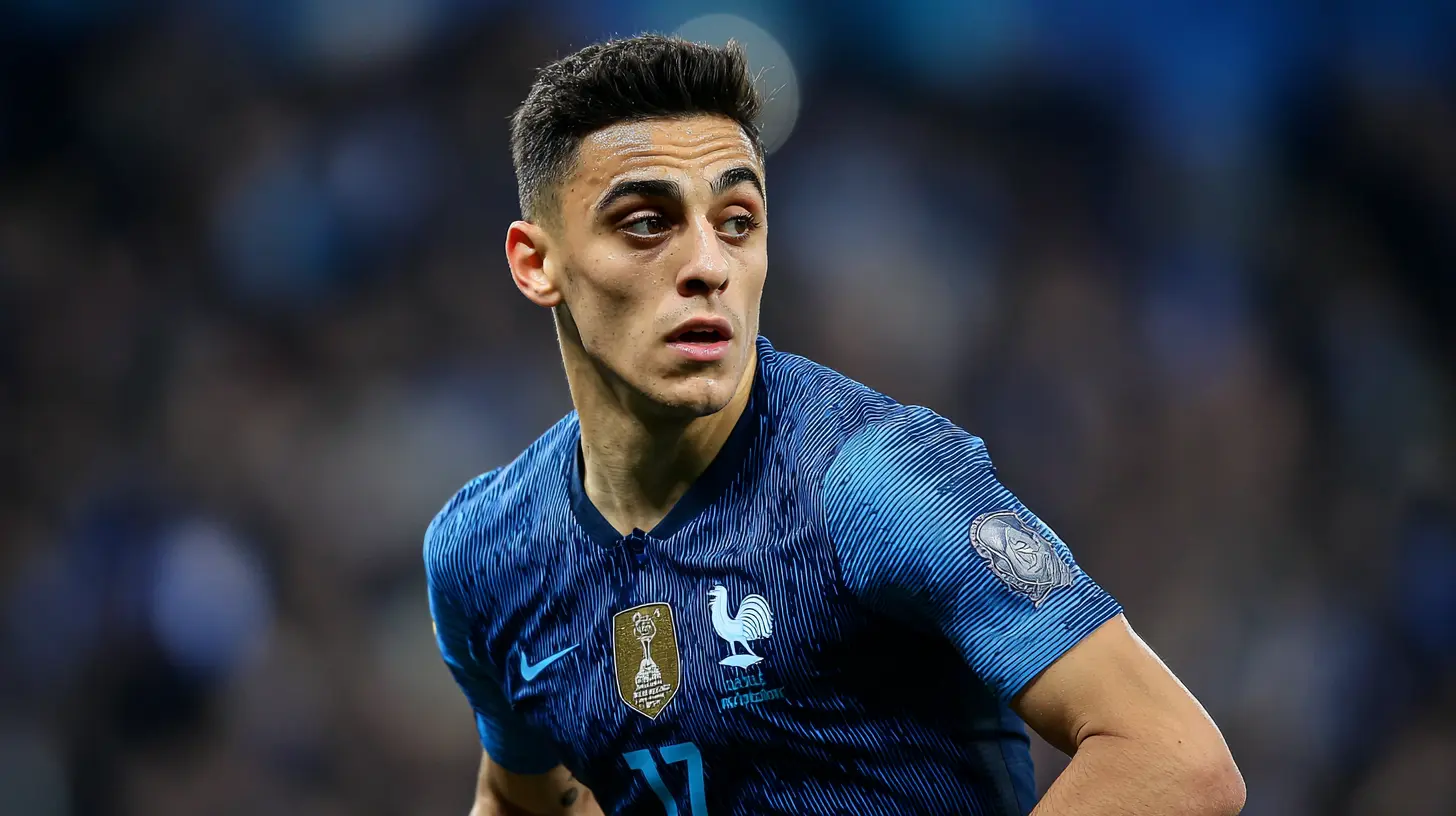
That distinction matters. Clubs do not chase the best player in a youth tournament. They chase the player whose attributes will still be rare in three years. The rising star every top club is chasing for 2027 is best understood as a type rather than a single guaranteed name: a left-footed, two-footed-capable wide attacker who can play inside the lines, press with discipline, and carry the ball through contact at speed. This article explains why that archetype has become the most contested asset in world football, how clubs identify it before the market does, and what mistakes even elite organizations make when they commit nine figures of future money to a teenager.

Why 2027 Is the Target Year, Not 2025
Recruitment planning runs on a lag that casual observers underestimate. A club that wants a player at peak value in the 2027-28 season typically begins formal tracking two to three years earlier. That means the decisive scouting work is happening now.There are three practical reasons for the long runway.
First, contract leverage. Most elite academy graduates sign a first professional deal at 17 or 18. That contract usually runs three to five years. A club that wants to buy before the price explodes must move in the window when the player has roughly 18 to 24 months remaining. For a player born in 2007 or 2008, that window lands squarely in 2026 and 2027.
Second, physical projection. Clubs are not buying the body they see. They are buying the body that will exist after three more years of structured strength work. A winger who is quick but slight at 17 may add five to seven kilograms of lean mass without losing acceleration. That projection is the single hardest part of the evaluation, and it is why medical and performance staff now sit in the same meetings as scouts.
Third, tactical timing. The dominant pressing and possession structures of the late 2020s reward players who can operate in multiple zones. A player developed purely as a touchline winger in 2023 may be obsolete by 2027. A player who has already learned to receive between the lines, rotate into central pockets, and defend the half-space will be plug-and-play.
Clubs are not guessing about 2027. They are reverse-engineering it.

The Archetype: What Clubs Are Actually Buying
Ask ten sporting directors to describe the ideal 2027 attacker and you will hear the same cluster of traits in different order.Two-Footedness as a Baseline, Not a Bonus
For two decades, the inverted winger was the cheat code. A left-footed player on the right could cut inside and shoot. Defenses adapted. They now show the player outside and funnel him toward the touchline, where his weaker foot becomes a liability.The response is a generation of attackers who are genuinely comfortable on both feet. Not ambidextrous in a trick-shot sense, but capable of delivering a cross, a cutback, and a shot with either foot without a visible drop in quality. This is the trait that separates a good prospect from a nine-figure one.
Why it works: a defender cannot commit his body weight until the attacker commits his. Two-footedness delays that commitment by a fraction of a second, and at elite level that fraction is the whole game.
Pressing Intelligence Over Raw Speed
Speed still matters. It always will. But clubs have learned that a fast player who presses in the wrong angle is a liability against teams that build out from the back. The modern requirement is knowing when to press, when to hold, and which passing lane to cut.Coaches describe this as "pressing with a purpose." The player does not sprint at the center back. He approaches at an angle that eliminates the switch of play, forces the ball into a trap, and arrives with his body shape already prepared to counter-press if the ball is lost.
This is coachable, but only to a point. Scouts look for players who already do it without instruction. That signals game intelligence rather than obedience.
Ball Carrying Through Contact
The most valuable skill in transition football is the ability to carry the ball five to fifteen meters while absorbing physical pressure. Not dribbling past three players in a phone booth. Carrying. Receiving with a defender on the back, shielding, turning, and driving into space.Clubs measure this with progressive carries and carry distance under pressure. A player who can do it consistently forces the opposition to commit a second defender, which creates the free man elsewhere. That is the entire logic of modern attacking play.
Defensive Floor
Every top club now demands that attackers defend. Not aggressively, but competently. The player must understand his role in the block, track the overlapping fullback, and recover into shape when possession is lost.A player with a low defensive floor can still be a star, but he limits which systems he can play in. That reduces his market. Clubs factor this into valuation before they ever make a bid.

How Clubs Identify the Star Before the Market Does
The public sees goals and assists. Recruitment departments see something else entirely.The Data Layer
Modern scouting uses event data and tracking data. Event data records what happened: passes, shots, duels, carries. Tracking data records where everyone was when it happened. Combined, they allow analysts to isolate actions that repeat and predict future output.The metrics that matter most for a 2027 attacker are not goals. They are:
- Progressive carries per 90 minutes
- Carries into the final third
- Shot-creating actions from open play
- Pressure regains in the attacking third
- Pass completion under high pressure
- Expected goals and expected assists per 90, adjusted for league strength
A player with modest goal numbers but elite shot-creating actions in a mid-tier league is often a better bet than a prolific scorer in a weak league. The scorer may simply be taking more shots. The creator is generating value for others, which tends to translate upward more reliably.
The Eye Test, Refined
Data tells you who to watch. It does not tell you what you are watching. Scouts still do the decisive work, but the questions have changed. They no longer ask "is he good?" They ask:- How does he behave when his team is losing?
- What does he do in the ten seconds after he loses the ball?
- How does he receive the ball with his back to goal?
- Does he scan before receiving, and how often?
- How does he react when a teammate makes a run he did not expect?
Scanning frequency is one of the most predictive behaviors in elite development. Players who check their shoulder three or four times before receiving consistently outperform those who do not, because they already know where the space is before the ball arrives.
The Character Check
Clubs now invest heavily in background work. They speak to youth coaches, teachers, and former teammates. They want to know how the player handles being benched, how he responds to criticism, and whether his family structure supports a move abroad at 18.This is not moralizing. It is risk management. A player who cannot adapt to a new country, a new language, and a new tactical system will underperform his talent. The transfer fee does not change that.
The Comparison: Two Profiles, Two Bets
Consider two hypothetical prospects, both 18, both playing in competitive European leagues.Player A is a right winger with explosive pace and a strong right foot. He scores 12 goals in a season, mostly from cutbacks and counter-attacks. He rarely presses and does not track back. His highlight reel is spectacular.
Player B is a left-footed attacker who plays across the front line. He scores 6 goals and provides 9 assists. He presses consistently, carries the ball through pressure, and completes passes in tight areas. His highlight reel is less dramatic.
Most supporters would take Player A. Most recruitment departments would take Player B.
The reasoning is straightforward. Player A's output depends on a specific system and a specific role. If he moves to a club that dominates possession and faces deep blocks, his main weapon, space in behind, disappears. Player B's output depends on skills that work in any system. He can play wide, central, or as a false nine. He can press or sit. He creates for others, which means he does not need to be the primary scorer.
This is why the market for two-footed, multi-positional attackers has inflated faster than the market for pure finishers. The former is system-proof. The latter is system-dependent.
The Trade-Offs Clubs Must Weigh
Signing a rising star for 2027 is not a simple decision. It involves genuine tension between competing goals.Potential Versus Readiness
A 17-year-old with elite potential may not be ready to contribute for two years. A 20-year-old with a lower ceiling can help immediately. Clubs with impatient ownership tend to buy readiness. Clubs with a long-term sporting project tend to buy potential.The mistake is buying potential and then judging it on immediate output. If a club signs a player for 2027, it must build a development plan that includes loan spells, managed minutes, and a clear pathway. Without that, the investment stalls.
Fee Versus Wage Structure
A large transfer fee is visible. A large wage is corrosive. If a teenager arrives on a salary that exceeds established first-team players, the dressing room notices. This is one of the most common and most damaging mistakes in modern recruitment.Best practice is to keep the base wage modest and load the contract with performance incentives. This aligns the player's interests with the club's and protects the wage structure. It also gives the player a reason to fight for minutes rather than assume them.
Development Versus Resale Value
Some clubs develop players to win. Others develop them to sell. These are different businesses, and they require different profiles. A club that intends to sell in three years should prioritize players whose style is widely coveted, which usually means technical, two-footed, and tactically flexible. A club that intends to keep a player for a decade should prioritize durability, character, and positional fit.Neither approach is wrong. The mistake is being unclear about which one you are running.
Common Mistakes and Misconceptions
Misconception One: The Best Player in a Youth Tournament Is the Best Prospect
Tournament football rewards players who mature early physically. A 17-year-old who is already strong and fast can dominate peers who will eventually catch up and surpass him. Scouts know this. They weight league performance over tournament performance, because leagues expose players to sustained physical and tactical demands.Misconception Two: Goals Are the Best Predictor
Goals are the output. They are not the process. A player scoring 20 goals in a youth league may be doing so through physical dominance that will not translate. A player scoring 8 goals but generating high-quality chances for himself and others is often the better bet.Mistake Three: Ignoring the League Context
A player performing well in a league with high pressing intensity and tactical discipline is a safer bet than one performing in a league where defenders give him time. The step up to elite European football is brutal for players who have never been pressed consistently.Mistake Four: Underestimating the Adaptation Curve
Moving to a new country at 18 is hard. Language, culture, weather, food, and loneliness all affect performance. Clubs that provide genuine support, language classes, a mentor, and a clear plan for the first six months see better returns. Clubs that treat the player as an asset rather than a person often watch that asset depreciate.Mistake Five: Buying the Highlight Reel
Agents package players. That is their job. Recruitment departments must look past the edited clips and evaluate the full 90 minutes, including the boring parts. What does the player do when his team is defending a lead? How does he react to a bad pass from a teammate? These moments reveal more than any compilation.Best Practices for Clubs and for Players
For Clubs
Build a cross-functional evaluation team. Scouts, analysts, medical staff, and coaches should all contribute to the decision. A player who passes the eye test but fails the medical projection is not a good signing.Track players for at least 18 months before bidding. A single season can be an outlier. Two seasons of consistent performance is a pattern.
Define the role before you buy. If you do not know where the player will play in your system, you are buying a problem, not a solution.
Plan the pathway. Specify the loan spells, the minutes targets, and the integration timeline. Write it down. Review it every six months.
Protect the wage structure. Incentives over base salary. Always.
For Players and Their Advisors
Choose minutes over prestige. A player who plays 2,500 minutes at a mid-tier club develops faster than one who plays 600 minutes at a giant. The giant will still be there in two years.Prioritize coaching quality. A club with a proven record of developing young attackers is worth more than a club with a bigger stadium.
Do not rush the move. The first professional contract sets the trajectory. A bad first move can cost three years of development.
Work on the weaker foot. Every day. It is the single most valuable investment a young attacker can make.
What to Watch Over the Next Two Years
The 2027 market will be shaped by several trends that are already visible.Clubs are increasingly willing to buy players before they have broken into a first team, using data to project future output. This means the window to sign a rising star at a reasonable price is closing. The clubs that move earliest will get the best value.
The tactical demand for multi-positional attackers will continue to grow. Players who can only play one role will be cheaper. Players who can play three will be expensive.
The physical demands of the game will keep rising. Clubs will prioritize durability and load tolerance alongside technical ability. A player who cannot handle 50 games a season will struggle to justify a large fee, no matter how talented.
And the adaptation factor will become more important, not less. As clubs sign younger players from more diverse backgrounds, the support structures around them will determine whether the investment succeeds or fails.
The Bottom Line
The rising star every top club is chasing for 2027 is not a single name you can look up today. It is a profile: a two-footed, tactically flexible, physically resilient attacker who presses, carries, and creates. Clubs are tracking dozens of players who fit that description, and the ones who move first, evaluate honestly, and plan the development pathway carefully will be the ones who benefit.For supporters, this means the transfer rumors you read in 2027 will have been written in scouting reports in 2025. For clubs, it means the work is already underway. For the players themselves, it means the next two years of development, on the weaker foot, in the gym, and in the classroom of tactical education, will determine whether they become the chased or the chaser.
all images in this post were generated using AI tools
Category:
Transfer NewsAuthor:

Onyx Frye