The Rise of Bilingual Broadcasting and Its Social Impact
1 November 2026
A generation ago, a sports fan in Miami watching a Dolphins game had a fairly simple choice: the English-language network feed or nothing. Today that same fan can flip between English and Spanish calls of the same play, and the Spanish-language option might be the more passionate, more technically detailed, and more culturally fluent broadcast of the two. That shift is not a small scheduling curiosity. It reflects a structural change in how sports media reaches audiences, and it carries consequences that reach well beyond the broadcast booth.
Bilingual broadcasting, meaning the deliberate production and distribution of live sports commentary in two or more languages for the same event, has moved from a niche service for immigrant communities to a core part of how major leagues, teams, and networks think about growth. Understanding why it happened, how it works in practice, where it succeeds and where it stumbles, and what it means socially is essential for anyone working in sports media, marketing, or community relations.
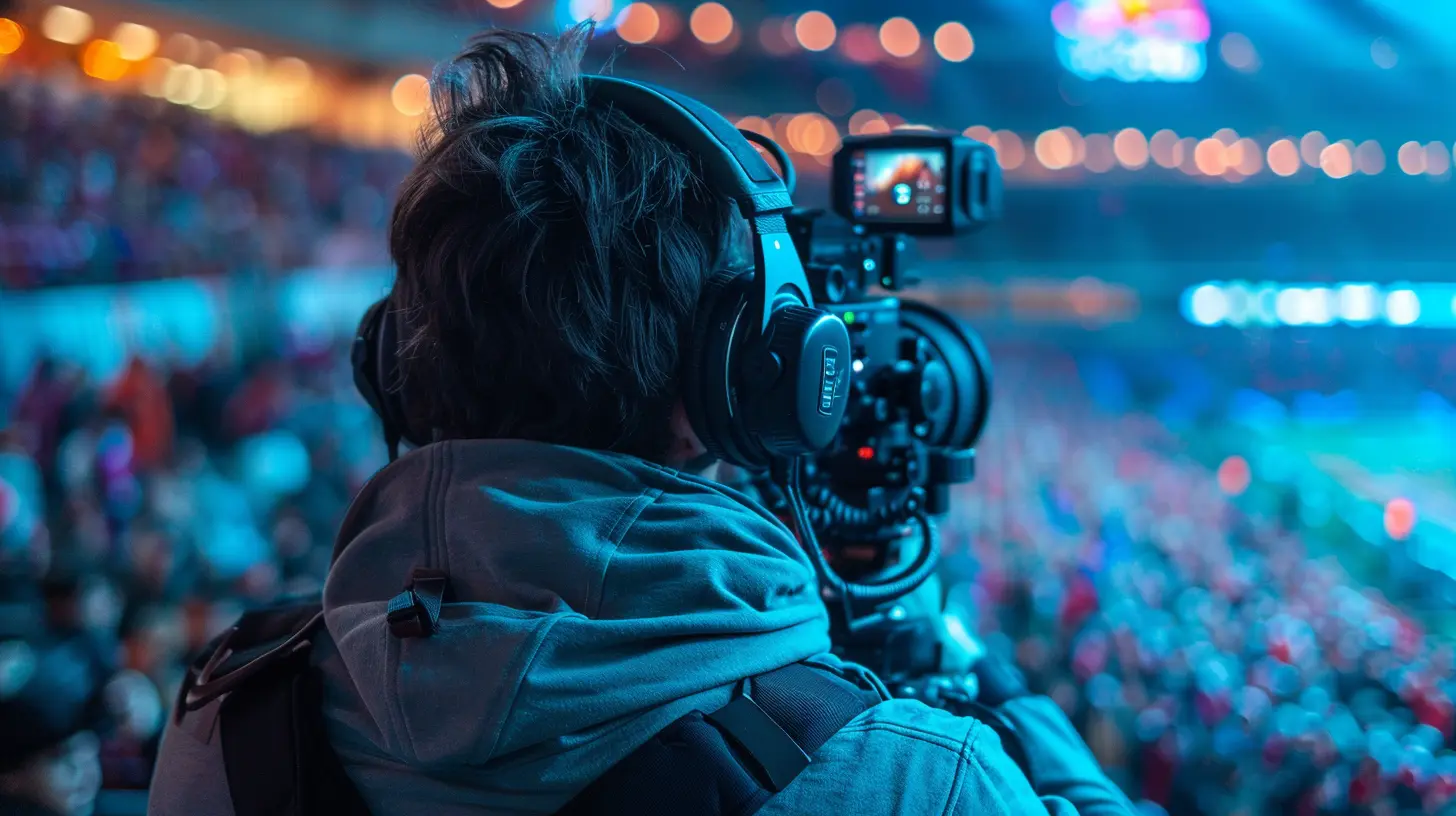
What Bilingual Broadcasting Actually Means
The term gets used loosely, so it helps to separate the different models. They are not interchangeable, and each has distinct costs, audiences, and outcomes.Simulcast versus dedicated productions
The simplest model is a simulcast: one video feed with two audio channels, one in each language. The viewer selects a language track. This is cheap and operationally straightforward, but it has limits. The two commentary teams cannot react to each other, and the visual presentation, including graphics and on-screen text, usually stays in one language.A dedicated production goes further. Each language gets its own commentators, its own graphics package, its own studio segments, and often its own advertising. This costs significantly more, but it produces a broadcast that feels native rather than translated. A Spanish-language dedicated production is not an English broadcast with a translator speaking over it. It has its own rhythm, its own references, and its own relationship with the audience.
The middle path: bilingual commentators
Some broadcasts use a single commentator or analyst who moves fluidly between languages, or a pairing where one voice handles play-by-play in one language and the analyst responds in another. This works best in markets with genuinely mixed audiences and in sports where the vocabulary overlaps heavily. It can feel intimate and inclusive, but it demands exceptional linguistic skill and can alienate monolingual listeners on both sides if handled poorly.Subtitling and captioning
Subtitles are sometimes lumped into bilingual broadcasting, but they serve a different function. They improve accessibility for deaf and hard-of-hearing viewers and for people who read a second language better than they speak it. They are not a substitute for native-language commentary, because sports commentary depends on tone, timing, and emotion as much as information.
Why This Is Happening Now
The rise of bilingual broadcasting is not a sudden cultural awakening. It is the convergence of several practical forces.Demographic reality. In the United States, Spanish-language sports audiences are large, loyal, and younger on average than English-language audiences in several major sports. Networks noticed that Spanish-language broadcasts of soccer, baseball, and boxing often drew ratings that rivaled or exceeded English-language equivalents in certain markets. That is a business signal, not a courtesy.
Streaming removed the scarcity problem. When broadcast spectrum was limited, adding a second language meant displacing something else. Streaming platforms have no such constraint. A single event can carry five audio tracks at marginal additional cost. This technological shift is arguably the single biggest enabler of the trend.
Global rights deals. Leagues sell rights across regions, and a single international feed with multiple language options is more valuable than separate feeds. The Premier League, the NBA, and Formula 1 all operate in markets where multilingual delivery is expected rather than exceptional.
Athlete and fan demographics. Rosters in many leagues are deeply international. A team with players from Brazil, Japan, Nigeria, and Croatia has natural audiences in multiple languages. Bilingual broadcasting lets a club speak directly to those communities rather than hoping they find an English feed.

The Social Impact: Beyond Convenience
This is where the conversation gets more interesting, and where most commentary stops short. Bilingual broadcasting is often framed as a customer service improvement. It is more than that.Representation and belonging
When a fan hears a broadcast in their first language, the experience changes qualitatively. Idioms land. Humor works. Cultural references to a player's background or a club's history are understood without explanation. Sociologists who study media and belonging have long noted that language is one of the primary ways people feel included or excluded from a public space. A Spanish-language broadcast of a baseball game does not just convey the score. It tells a community that its way of experiencing the sport is legitimate and worth investing in.This matters for younger viewers in particular. Second-generation fans often navigate between the language of home and the language of school and work. A bilingual broadcast gives them a space where both identities coexist rather than compete.
Language preservation and pride
There is a quieter effect that rarely makes headlines. Regular access to high-quality broadcast language in a minority language supports vocabulary, register, and confidence among speakers. Sports commentary is a rich linguistic register, full of metaphor, urgency, and specialized terms. Hearing it regularly reinforces the language's presence in public life. This is not a trivial benefit. Languages that lose their public, high-status domains tend to erode over generations.Bridging rather than segregating
A common misconception is that bilingual broadcasting fragments audiences. In practice, the opposite often happens. English-speaking fans who follow international soccer frequently tune into Spanish-language broadcasts because the commentary is more expressive or because the English feed is unavailable. Bilingual broadcasts can become shared cultural objects, discussed across language lines. The key is whether the broadcast invites crossover or treats languages as separate silos. Broadcasts that explain cultural references, use occasional code-switching, and avoid assuming a single audience tend to build bridges. Broadcasts that treat each language track as a sealed product tend to reinforce separation.Economic inclusion
Bilingual broadcasting also creates jobs and career paths that did not exist a generation ago. Play-by-play commentators, analysts, producers, and graphics designers who work in two languages are now genuinely valuable. This has opened doors for bilingual professionals who were previously told their accent or their second language was a liability in broadcast media.
How It Works in Practice: Lessons from Different Sports
Soccer
Soccer is the clearest case study. In the United States, Spanish-language coverage of Liga MX and the men's national team has built a dedicated following that is not simply a translation of the English audience. The commentary style is different: more sustained narrative, more emotional crescendo, more willingness to let silence do work. English-language broadcasters have studied and borrowed from it. The crossover is real and bidirectional.Baseball
Baseball's bilingual history runs deep, particularly in markets with large Latino populations. Spanish-language radio has been a fixture for decades, and television has followed. The sport's slow pace rewards the storytelling style that many Spanish-language broadcasters favor, and the statistical vocabulary translates well. The challenge has been consistency: not every market has invested equally, and quality varies widely.Basketball and football
The NBA has pushed multilingual delivery through streaming and international rights, and its global player base makes this natural. American football has been slower, partly because the sport's domestic audience is more monolingual and partly because the terminology is harder to translate cleanly. When it does happen, it tends to be tied to specific markets rather than league-wide strategy.Combat sports and motorsport
Boxing and mixed martial arts have long used bilingual commentary because the audiences are genuinely international and the events are sold globally. Motorsport, especially Formula 1, has moved decisively toward multi-language feeds as its audience has expanded. These sports show what happens when bilingual delivery is treated as a default rather than an add-on.Trade-offs and Common Mistakes
Bilingual broadcasting is not automatically good. Several failure modes are common enough to be worth naming.Translation instead of adaptation. The most frequent mistake is treating the second language as a translation task. A literal rendering of an English call sounds stiff and misses cultural context. Effective bilingual broadcasting hires commentators who think in the target language, not translators who convert on the fly.
Underinvesting in the second feed. A thin production with a single commentator and no graphics support signals to the audience that they are an afterthought. Audiences notice. If you commit to a second language, budget for it properly or do not launch it.
Assuming one audience per language. Spanish speakers in Miami, Los Angeles, and Mexico City are not a single audience. Regional vocabulary, humor, and sports references differ. Broadcasts that treat a language as monolithic often feel generic to everyone.
Ignoring the visual layer. Graphics, lower thirds, and stat overlays often stay in one language. This undermines the experience for viewers who cannot read the on-screen text. Localized graphics are more work but they matter.
Overpromising and underdelivering. Announcing a bilingual broadcast and then offering only select games or a partial season creates frustration. Consistency builds trust.
Neglecting the monolingual audience. Some English-speaking fans worry that bilingual investment means less investment in their broadcast. Clear communication about resources and scheduling helps, and in practice the two audiences often reinforce each other.
What to Consider Before Launching a Bilingual Broadcast
For teams, leagues, and networks weighing this decision, a few practical questions cut through the noise.Who is actually in your market, and what do they want? Demographic data is a starting point, not an answer. Talk to community organizations, fan groups, and local media. Find out whether the gap is language access, cultural relevance, or both.
Which model fits your budget and your goals? Simulcast audio is a reasonable first step. Dedicated production is the gold standard. Bilingual commentators work in specific contexts. Choose deliberately rather than defaulting to the cheapest option and calling it a strategy.
Who will do the work? Talent is the hardest part. You need commentators with genuine sports knowledge, native fluency, and broadcast craft. That combination is rare. Invest in recruiting and in developing people internally. Poaching from established Spanish-language networks is common but expensive.
How will you measure success? Ratings alone miss the point. Look at engagement, retention, community feedback, and crossover between language audiences. A bilingual broadcast that draws modest numbers but builds deep loyalty may be more valuable than a larger but shallow audience.
What is your long-term commitment? Launching and retreating damages credibility more than never launching. If you cannot sustain it, wait until you can.
Misconceptions Worth Correcting
A few beliefs about bilingual broadcasting deserve direct pushback.The idea that it is only for immigrant communities is outdated. Younger bilingual viewers, heritage speakers, and curious monolingual fans all use these broadcasts. The audience is broader and more fluid than the label suggests.
The idea that it dilutes the primary broadcast is not supported by how resources actually work. A second audio feed or a dedicated streaming production rarely cannibalizes the main product. It usually expands the total audience.
The idea that English is the default and other languages are accommodations is a framing problem. In many markets, the second language audience is not a minority add-on. It is a substantial, loyal, and growing core.
Where This Is Heading
The trajectory is toward multilingual delivery as a baseline expectation rather than a differentiator. Streaming infrastructure makes it cheap. Global audiences make it necessary. The interesting question is not whether more broadcasts will be bilingual, but how well they will be done.The organizations that get this right will treat language not as a checkbox but as a design principle. They will hire people who live in the language, build production workflows that respect both audiences, and measure success in community trust rather than raw reach. The ones that get it wrong will produce translated broadcasts that satisfy no one and quietly disappear.
For fans, the shift is mostly a gain. More ways to hear the game, more voices that sound like home, and more chances to encounter a sport through someone else's rhythm and vocabulary. That is a meaningful change in how sports sit in public life, and it is worth paying attention to.
all images in this post were generated using AI tools
Category:
Sports And SocietyAuthor:

Onyx Frye