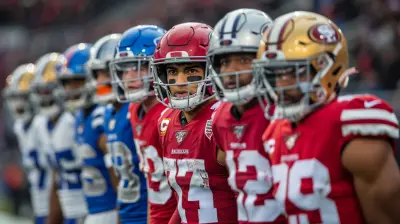
The Growing Trend of Sports-Inspired Philanthropy
28 November 2026
Professional athletes occupy a strange place in modern culture. They are watched by millions, paid extraordinarily well, and given a platform that few other professions can match. Over the past two decades, a noticeable shift has taken place in how athletes, teams, leagues, and sports businesses approach giving back. What was once a scattered collection of charity appearances and signed jersey auctions has matured into something more deliberate: sports-inspired philanthropy as a structured, strategic, and increasingly professional part of the sports ecosystem.
This shift deserves serious attention, not just from athletes and their advisors, but from donors, nonprofit leaders, corporate partners, and fans who want to understand where their money and attention actually go. The trend is real, it is growing, and it comes with genuine benefits as well as real pitfalls that are rarely discussed in the glow of positive press coverage.

What Sports-Inspired Philanthropy Actually Means
The term covers a wide spectrum. At one end, you have an individual athlete writing a personal check or showing up at a hospital. At the other end, you have professional leagues running multi-million dollar community investment programs, team foundations with full-time staff, and athlete-led venture philanthropy funds that operate like small investment firms.Between those extremes sit several common models:
- Athlete foundations. A player establishes a formal nonprofit, usually focused on a cause connected to their personal story, such as education, health, or youth sports access.
- Team and league foundations. Organizations like the community arms of major franchises pool resources from ownership, players, and sponsors to fund regional programs.
- Signature initiatives. A league or team adopts a specific campaign, such as cancer awareness month partnerships or equipment donation drives, and builds annual programming around it.
- Cause-driven partnerships. Athletes align with existing nonprofits as ambassadors, board members, or co-funders rather than building their own organizations.
- Social enterprise and impact investing. Some athletes channel money into businesses or funds that pursue social outcomes alongside financial returns.
Each model has different cost structures, different accountability demands, and different failure modes. Treating them as interchangeable is one of the most common mistakes in this space.

Why the Trend Is Accelerating
Several forces are converging to push sports philanthropy forward.Athlete wealth and visibility have grown together
Media rights deals, endorsements, and global fan bases have created a class of athletes with both significant personal wealth and enormous public reach. When a star player posts about a cause, the attention it generates can be worth more than a mid-sized foundation's annual marketing budget. Athletes increasingly recognize this leverage and want to use it deliberately rather than accidentally.Fans expect more than entertainment
Modern fans, particularly younger ones, tend to evaluate teams and athletes on more than wins and losses. They notice community involvement and respond to authenticity. Teams have picked up on this. Community relations departments that once handled photo opportunities now run year-round programs with measurable goals, because ownership groups see community trust as a long-term business asset, not just a public relations line item.The infrastructure has professionalized
Two decades ago, an athlete wanting to start a foundation often relied on family members with good intentions and little nonprofit experience. Today there is a growing ecosystem of advisors, lawyers, accountants, and consultants who specialize in athlete philanthropy. Leagues run rookie financial education programs that include giving strategy. Player unions offer resources. This infrastructure lowers the barrier to doing it well, though it does not eliminate the risk of doing it badly.The money is following the model
Sponsors and corporate partners have learned that aligning with sports-based charitable work can be more effective than generic sponsorship. A shoe company that funds a youth sports access program tied to one of its athletes gets brand association, community goodwill, and a genuine story to tell. That commercial logic, whatever you think of it, has poured resources into the space and made more ambitious programs possible.
The Case for Sports Philanthropy Done Well
When it works, sports-inspired philanthropy delivers things that traditional charitable giving often struggles to achieve.Reach. Athletes and teams command attention in ways that most nonprofits cannot buy. A single campaign can put an issue in front of millions of people who would never encounter it otherwise.
Trust transfer. Fans trust their teams and favorite players. When that trust is lent to a cause, it can accelerate donor confidence and volunteer participation.
Local anchoring. Team foundations are often deeply rooted in their cities. They understand local needs, maintain relationships with local schools and service providers, and can respond quickly when a community faces a crisis.
Role modeling. When a star athlete talks openly about mental health, literacy, or food insecurity, it changes norms. Young fans especially absorb those messages in ways that formal public service announcements rarely achieve.
Convening power. A team can bring together rival businesses, city agencies, and nonprofits around a shared goal in a way that few other institutions can. That convening function is often undervalued but can be the most durable contribution of all.

The Risks Nobody Talks About Enough
The positive framing around sports philanthropy is well earned in many cases, but the space has real structural problems that deserve honest examination.The founder dependency trap
Many athlete foundations are built entirely around one person. When that athlete retires, gets traded, or loses interest, the organization can collapse. Donors who gave because of the founder's name may not stay. Staff who built programs around the founder's availability may find themselves without a champion. Smart foundations build independent governance and diversified funding from day one, but many do not, and the result is a quiet graveyard of defunct athlete charities that few people discuss.Mission drift and vanity projects
A foundation created mainly to enhance an athlete's brand tends to make decisions based on visibility rather than impact. That can mean funding photogenic events instead of unglamorous but effective programs, or chasing new causes each year instead of building deep expertise. The test is simple: if the founder's name were removed, would the organization still make the same funding decisions? If the answer is no, the philanthropy is serving the brand more than the cause.Accountability gaps
Nonprofit status brings reporting requirements, but those requirements are modest. A foundation can file its paperwork, hold a gala, and still have little idea whether its programs change anything. The sports world's culture of positive publicity makes it hard for insiders to raise uncomfortable questions about effectiveness. Independent evaluation, published results including failures, and honest board oversight are the antidotes, but they require a level of humility that celebrity culture does not always reward.The displacement problem
Money and attention flowing toward athlete-branded causes can crowd out smaller community organizations doing similar work without a famous face. A team foundation that launches a youth sports program may inadvertently compete with a neighborhood nonprofit that has served the same families for decades. The best practitioners address this deliberately, partnering with existing groups rather than reinventing them, and using their platform to amplify rather than replace local expertise.Tax and governance complexity
Athletes face complicated financial lives, and charitable structures interact with those complexities in ways that are easy to get wrong. Private foundations, donor-advised funds, and public charities carry different rules, different deduction limits, and different disclosure obligations. Self-dealing rules in particular can trip up well-meaning founders who want to hire family members or use foundation resources in connection with personal appearances. Professional advice is not optional here; it is essential.Practical Guidance for Athletes and Their Advisors
If you are an athlete considering formal philanthropy, the decisions you make in the first year will shape everything that follows. A few principles matter more than the rest.Decide what problem you are actually trying to solve. "I want to give back" is a feeling, not a strategy. Spend real time identifying a specific issue, understanding who is already working on it, and figuring out where your unique assets, whether money, fame, time, or relationships, can add something that is missing. That last question is the one most people skip.
Choose the structure that fits the goal. If you want maximum flexibility and minimal administrative burden, a donor-advised fund may be the right home for your giving. If you want to run programs and employ staff, you need a public charity with proper governance. If you want to fund others' work, a private foundation or a giving circle may fit better. Each choice carries different costs, disclosure requirements, and control trade-offs. There is no universal right answer, only the right answer for your specific situation.
Build governance before you build programs. Recruit board members who will tell you the truth and who bring expertise you lack, whether in nonprofit finance, program evaluation, or the community you aim to serve. Write bylaws that protect the mission from your own future changes of heart. Set term limits. The organizations that survive their founders are the ones that made themselves independent early.
Fund the boring parts. Evaluation, accounting, and compliance cost money and produce nothing photogenic. Underfunding them is the fastest route to an organization that looks successful and accomplishes little. Budget for overhead honestly and be prepared to explain to donors why it matters.
Publish your results, including the disappointing ones. Credibility in philanthropy comes from transparency. Sharing what did not work builds more trust than another highlight reel, and it helps the entire field avoid repeating mistakes.
Plan for your exit from day one. Athletes' careers end earlier than most. A foundation designed around a fifteen-year playing career should have a fifteen-year plan for independence, merger, or orderly wind-down. Deciding this early is far easier than deciding it in a moment of transition.
Guidance for Donors, Sponsors, and Fans
If you are on the giving or partnering side, a healthy skepticism serves everyone.Ask what percentage of the organization's budget goes to programs versus overhead, but do not treat low overhead as automatically good. Starving administration produces weak organizations. What matters more is whether the organization can articulate its theory of change, whether it measures outcomes, and whether its leadership shows evidence of learning from data.
Look for genuine community partnerships. An athlete foundation that works alongside established local nonprofits, rather than around them, is usually a better bet than one building everything from scratch.
Be wary of one-off events with large press presence and unclear follow-through. A gala that raises money is fine, but ask where the money goes and what happens the other eleven months of the year.
For corporate sponsors, examine whether the partnership is structured to produce real outcomes or merely association. The best sports charity partnerships include shared metrics, multi-year commitments, and honest reporting, not just logo placement.
What the Future Likely Holds
Several directions seem plausible, though none is certain.More athletes are likely to favor giving vehicles that offer flexibility and lower administrative burden, such as donor-advised funds and collaborative giving circles, over building standalone foundations. This is generally a healthy development, since it channels money toward established organizations with proven track records.
Impact measurement will probably become more standardized, driven by both donor expectations and the professionalization of the advisory ecosystem. Organizations that can demonstrate outcomes will attract resources; those that cannot will struggle.
Player-led collective action, in which groups of athletes pool resources around shared causes, may grow as a counterweight to individual branding. Collective models reduce founder dependency and can address issues too large for any single athlete's platform.
And the line between philanthropy, social enterprise, and advocacy will likely blur further. Athletes increasingly see their giving as one part of a broader public role that includes business investment and civic voice. That integration brings energy and risk in equal measure.
A Final Word on Getting It Right
Sports-inspired philanthropy is neither a cynical branding exercise nor a guaranteed force for good. It is a tool, and like any tool its value depends on how thoughtfully it is used. The athletes, teams, and organizations that treat it as serious work, with real strategy, real governance, and real accountability, are producing durable benefits in their communities. Those that treat it as an extension of public relations are producing photo opportunities and, eventually, quiet failures.The trend is growing because the underlying logic is sound: sports institutions have reach, trust, and resources that the social sector needs. The question for everyone involved, from the star player writing the first check to the fan deciding whether to support a cause, is whether that logic gets translated into practice with the rigor it deserves. The answer, in more cases than outsiders realize, is yes, and that is worth celebrating, provided the celebration comes with honest scrutiny.
all images in this post were generated using AI tools
Category:
Sports And SocietyAuthor:

Onyx Frye