The Future of Inclusivity in Professional Sports
25 August 2026
Professional sports have always been a mirror of society, reflecting both its progress and its fractures. For decades, the conversation around inclusivity was narrow, focused almost entirely on racial integration and, later, on gender participation. But the current landscape is far more complex. Athletes today are openly discussing mental health, competing as openly transgender individuals, advocating for disability accommodations, and challenging the traditional boundaries of motherhood in sport. The future of inclusivity is not a single destination. It is a continuous negotiation between tradition and evolution, between competitive fairness and human dignity.
The next decade will define how professional sports handle these tensions. The organizations that succeed will not be the ones that simply check boxes. They will be the ones that fundamentally rethink what athletic excellence means and who gets to define it. This article examines the practical realities, the difficult trade-offs, and the concrete steps that leagues, teams, and athletes can take to build a truly inclusive professional environment.
The Shifting Definition of Fairness
Fairness has always been the bedrock of competitive sport. The entire premise of athletics rests on the idea that, under the same rules and conditions, the best performer wins. But inclusivity challenges this premise in ways that many administrators are not prepared to handle. When you expand who can compete, you inevitably ask questions about what constitutes a level playing field.Consider the debate around transgender athletes in women's sports. There is no universally accepted scientific answer to how testosterone suppression affects performance over time. Some studies suggest that muscle mass and bone density advantages persist even after hormone therapy. Other research indicates that athletic performance metrics align more closely with cisgender women after a year of suppression. Both positions are supported by legitimate data, yet they lead to completely different policy conclusions.
The mistake many leagues make is treating this as a purely scientific question. It is not. It is a values question. Does the league prioritize the integrity of the existing competitive category, or does it prioritize the right of individuals to compete in the category that aligns with their gender identity? There is no neutral answer. Every policy choice privileges one value over another.
What the best organizations are doing now is separating the science from the policy. They fund independent research, they set clear timelines for when decisions will be revisited, and they communicate the trade-offs honestly to fans and athletes alike. The worst approach is to ignore the issue until a high-profile case forces a rushed decision. That almost always results in a policy that satisfies no one.
Beyond Gender: The Untapped Potential of Disability Inclusion
When most people think of inclusivity in sports, they think of gender identity or racial diversity. But the most significant untapped opportunity lies in disability inclusion. The Paralympic movement has grown enormously in visibility, yet professional mainstream leagues still have almost no pathway for athletes with disabilities to compete alongside able-bodied athletes.This is not about charity or tokenism. It is about recognizing that disability is not a monolith. A deaf athlete can compete in most sports with minimal accommodation. A runner with a prosthetic leg can be competitive at the highest levels, as demonstrated by athletes like Oscar Pistorius, regardless of the controversies surrounding his case. The question is whether leagues are willing to make the accommodations that would allow these athletes to qualify through merit rather than exception.
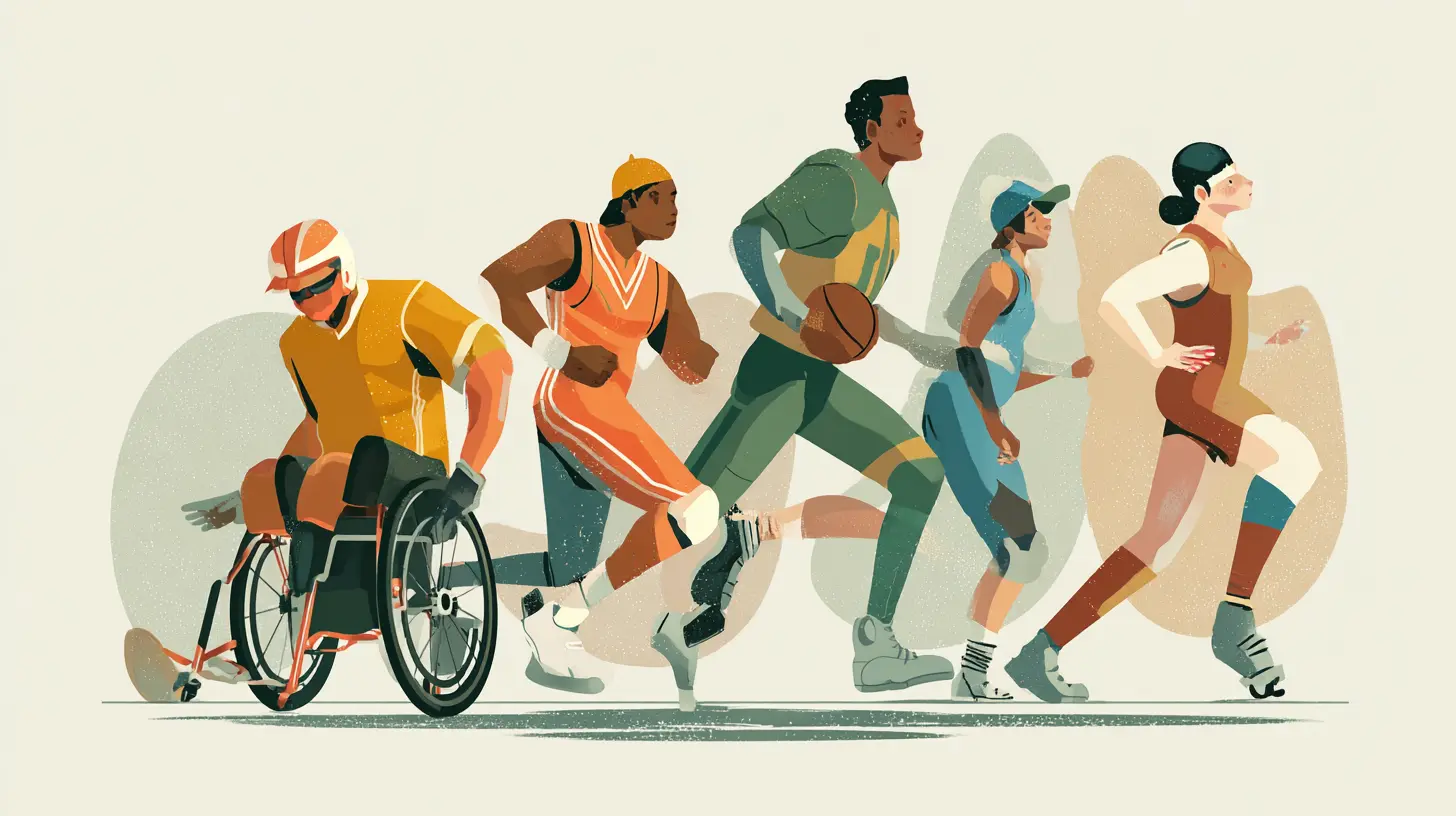
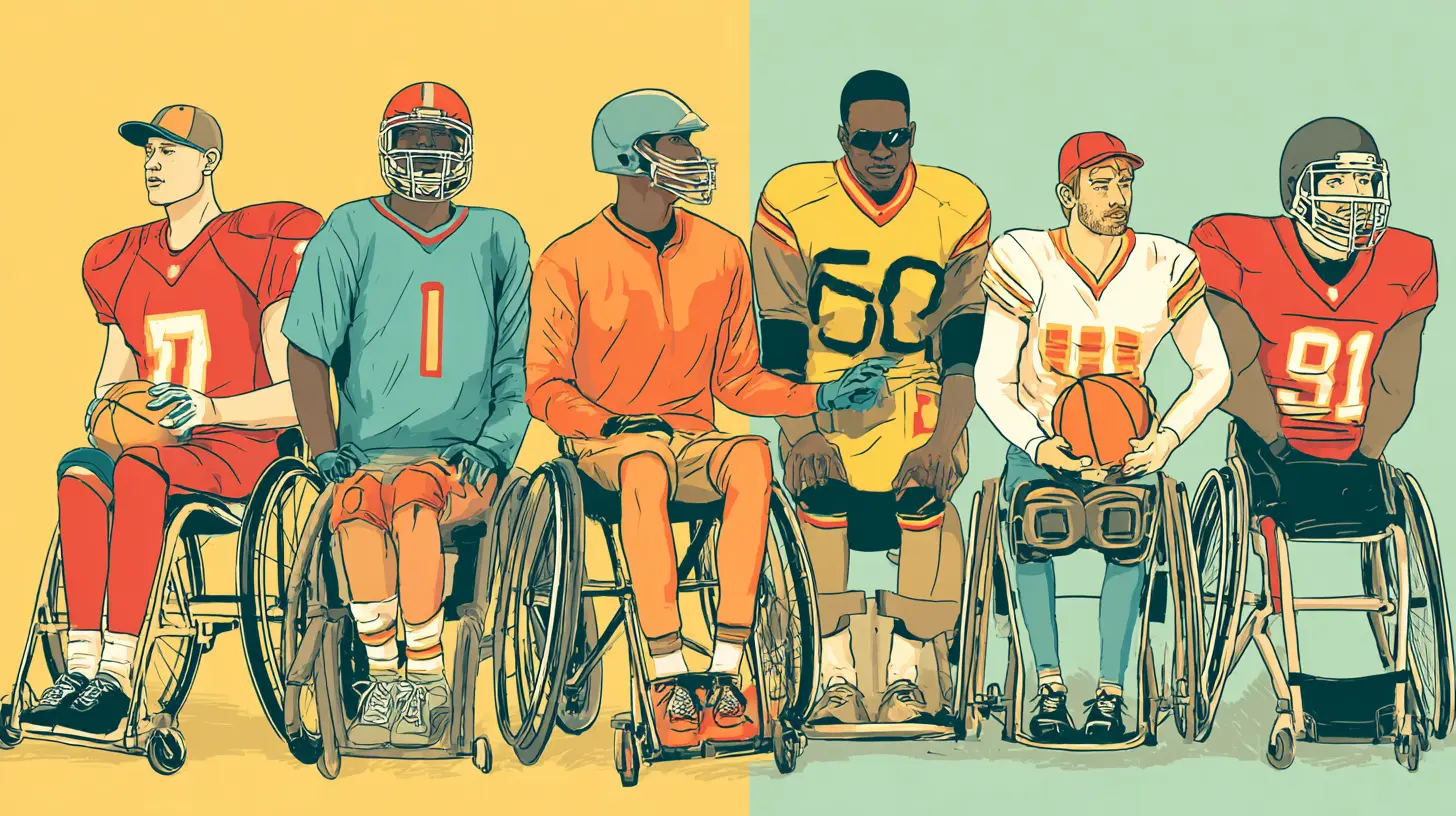
The practical challenge is that most professional sports have rigid equipment and technique standards. A swimmer with one arm cannot use the same stroke technique as a two-armed swimmer. A basketball player in a wheelchair cannot compete in the NBA, but they can compete in the National Wheelchair Basketball Association at an extremely high level. The future of inclusivity might not mean integrating all athletes into the same league. It might mean creating parallel professional structures that receive equal funding, equal media coverage, and equal respect.
The organizations that are leading in this area are not the big four American leagues. They are newer entities like the Premier Lacrosse League, which has made adaptive athletes part of its marketing and community outreach from day one. The lesson here is that inclusivity is much easier to build into a new organization than to retrofit into an established one. Established leagues have legacy rules, legacy facilities, and legacy cultures that resist change. New leagues can design for inclusion from the ground up.
Mental Health as an Inclusivity Issue
Inclusivity is often framed in terms of visible identity markers, but mental health is arguably the most universal form of exclusion in professional sports. The culture of toughness, the constant scrutiny, and the pressure to perform create an environment where athletes hide their struggles rather than seek help.The breakthrough moment was probably when Naomi Osaka withdrew from the French Open in 2021, and then when Simone Biles prioritized her safety during the Tokyo Olympics. These were not just personal decisions. They were public statements that the old model of athlete as unbreakable machine was no longer acceptable. The response from the public was overwhelmingly supportive, which signaled to leagues that the fan base was ahead of the administrators on this issue.
But there is a significant gap between public support and institutional change. Many teams still employ sports psychologists who report to the coaching staff rather than to the athletes. That creates a conflict of interest. An athlete who tells the team psychologist about performance anxiety might find that information used against them in contract negotiations. The future of mental health inclusivity requires independent mental health professionals who are bound by confidentiality and who are advocates for the athlete, not the organization.
There is also a practical component. Travel schedules, training loads, and media obligations are designed for peak physical performance, not psychological sustainability. Some European football clubs have started to reduce mandatory media appearances and build rest days into the calendar specifically for mental recovery. The results have been mixed, but the direction is correct. The next step is treating mental health data with the same seriousness as physical injury data. That means tracking workloads, monitoring sleep, and recognizing that burnout is a real injury with a real recovery process.
The Economics of Inclusion
Inclusivity is often discussed in moral terms, but it is also an economic issue. Professional sports are a business, and businesses respond to incentives. The good news is that the incentives for inclusivity are getting stronger.The fan base for professional sports is diversifying rapidly. Younger fans, in particular, expect the leagues they follow to reflect their values. A league that appears hostile to LGBTQ+ athletes or dismissive of disability issues risks losing that demographic to other entertainment options. Conversely, leagues that actively promote inclusive policies have seen measurable growth in merchandise sales, ticket purchases, and social media engagement from those communities.
There is also a talent acquisition angle. The pool of elite athletic talent is finite. If a league excludes certain groups, it is shrinking its own talent pool. The WNBA has been more proactive than most leagues in welcoming LGBTQ+ athletes, and that has arguably made it a more competitive and compelling product. The NBA has made significant strides in creating a welcoming environment for international players, which has expanded the league's global reach and revenue.
The economic argument is not without its complications. Some sponsors are still nervous about associating with athletes who are vocal about social issues. There have been instances where athletes lost endorsement deals because of their advocacy. But the larger trend is moving in the opposite direction. Major brands are actively seeking out athletes who have authentic voices on inclusivity topics because they resonate with consumers. The athletes who are most successful at this are the ones who are genuine rather than performative. Fans can tell the difference.
The Role of Athlete Unions and Player Associations
Player unions have traditionally focused on wages, working conditions, and benefits. Inclusivity has not been a primary bargaining issue. That is beginning to change, and it will likely become a central negotiating point in the next round of collective bargaining agreements across major leagues.The reason is that the athletes themselves are demanding it. Younger players are entering the league with different expectations than their predecessors. They want parental leave policies that apply to both mothers and fathers. They want gender-neutral facilities. They want clear grievance procedures for discrimination and harassment. They want the right to express their identities without fear of retaliation.
Unions are in a unique position to push these issues because they negotiate from a position of collective strength. A single athlete who requests a change in policy can be ignored. A union that makes inclusivity a strike issue cannot be. The most effective union strategies have been to bundle inclusivity demands with more traditional economic demands. This creates a package that the league cannot easily refuse without also refusing to address fair compensation.
There is a risk here, however. Some union members may feel that inclusivity demands divert attention from core economic issues. The most successful unions have addressed this by framing inclusivity as an economic issue. A team that loses a star player because of a hostile environment is a team that cannot win, which ultimately affects everyone's revenue. Inclusivity is not a distraction from the business of sports. It is part of the business.
Youth Development and the Pipeline Problem
Professional sports cannot be inclusive if the feeder systems are not inclusive. The vast majority of professional athletes come through youth programs, college teams, or national development academies. If those systems exclude or discourage certain groups, the professional level will never reflect the diversity of the general population.The most persistent problem is economic. Many youth sports have become pay-to-play, which systematically excludes low-income families. This disproportionately affects minority communities and also affects athletes with disabilities, who often face additional costs for adaptive equipment and specialized coaching. The result is that the talent pool at the professional level is not a meritocracy. It is a reflection of who could afford to participate.
Some countries have addressed this better than others. The European football model, where professional clubs run free or heavily subsidized youth academies, produces a much more economically diverse talent pool than the American model of club sports. The trade-off is that the European model is much more aggressive in cutting young players who do not make the grade, which creates its own exclusionary pressures.
The future of inclusivity requires a hybrid approach. Professional leagues need to fund talent identification programs in underserved communities. They need to provide equipment and coaching subsidies. They also need to create alternative pathways to the professional level that do not require a traditional youth sports resume. The NBA's Basketball Without Borders program and the NFL's international development pathway are good examples, but they are still small relative to the scale of the problem.
The Media's Role in Shaping Perceptions
The media does not just report on inclusivity in sports. It actively shapes what inclusivity means. The way a story is framed can either normalize a new reality or reinforce old prejudices.Consider the coverage of Caitlyn Jenner's coming out in 2015. The media treatment was largely respectful, but it also focused heavily on her physical appearance and her previous athletic achievements. That framing suggested that a transgender person's value was still tied to their conformity to traditional gender norms. More recent coverage of transgender athletes has been more varied, but it often falls into the trap of treating every transgender athlete as a symbol rather than an individual.
The best sports journalists are moving away from this approach. They are covering transgender athletes as athletes first, focusing on their technique, their strategy, and their competitive record. They are also doing the hard work of explaining the science and the policy debates without sensationalism. This is not easy. It requires a level of expertise that many general assignment reporters do not have.
The media also has a role in covering the fans. Inclusive policies are meaningless if the stadium experience is hostile. There have been documented cases of fans directing homophobic or ableist abuse at athletes. The response from leagues has been inconsistent. Some leagues have strong anti-discrimination policies and enforce them. Others issue vague statements and do nothing. The media can hold leagues accountable by reporting on these incidents consistently and by giving voice to the athletes who experience them.
Technology and the Future of Accessibility
Technology is often discussed in the context of performance enhancement, but it is also a powerful tool for inclusion. Advances in prosthetics, exoskeletons, and adaptive equipment are creating new possibilities for athletes with physical disabilities. The question is whether sports governing bodies will embrace these technologies or ban them.The Pistorius case was a cautionary tale. The IAAF initially banned his prosthetic blades, arguing that they gave him an unfair advantage. The Court of Arbitration for Sport overturned that decision, but the controversy never fully resolved. The underlying issue is that there is no objective way to determine whether an assistive technology provides an unfair advantage without first defining what "normal" human performance is.
The future will likely see more cases like this. As technology improves, the line between assistive and enhancing will blur further. The most forward-thinking approach is to create separate competitive categories based on functional ability rather than on traditional gender or disability classifications. This is already happening in some para-sports, where athletes are classified by their level of impairment. Extending this model to able-bodied sports would be a radical change, but it might be the only way to ensure fairness in a future where technology makes everyone superhuman.
There is also a more mundane but equally important technological aspect. Broadcast accessibility, stadium accessibility, and digital accessibility all matter. A deaf athlete cannot fully participate in a sport if the coach's instructions are only delivered verbally. A blind fan cannot enjoy a game if the broadcast does not have audio description. These are not glamorous issues, but they are the practical realities of inclusivity.
The Danger of Performative Inclusivity
One of the biggest risks in this space is performative inclusivity. This happens when leagues, teams, or brands make symbolic gestures without making substantive changes. They might wear rainbow jerseys for Pride Night but have no anti-discrimination policies in place. They might hold disability awareness events but have no accessible facilities.Fans and athletes are increasingly adept at spotting this. The backlash against performative inclusivity can be more damaging than doing nothing at all, because it signals that the organization is willing to exploit marginalized communities for marketing purposes without actually supporting them.
The best way to avoid performative inclusivity is to start with internal culture. An organization that treats its own employees with respect is much more likely to create a genuinely inclusive environment for its athletes and fans. This means looking at hiring practices, promotion pathways, and internal grievance mechanisms. It also means being transparent about failures. When an organization makes a mistake, acknowledging it and taking corrective action is far more credible than issuing a carefully worded non-apology.
Practical Recommendations for Leagues and Teams
For leagues and teams that want to move beyond rhetoric, there are several concrete steps that have proven effective.First, conduct an internal audit. Look at every policy and practice through an inclusivity lens. Who is excluded by this rule? Who is disadvantaged by this facility design? Who is made uncomfortable by this culture? The audit should be conducted by independent experts and the results should be published, even if they are embarrassing.
Second, establish clear accountability structures. Inclusivity should not be the responsibility of a single diversity officer. It should be part of every manager's job description. Performance reviews should include metrics related to creating an inclusive environment. This is the only way to ensure that the commitment is real.
Third, create formal feedback channels for athletes. This could be an anonymous hotline, a confidential ombudsperson, or regular town hall meetings. The key is that athletes must feel safe to speak up without fear of retaliation. The most common reason inclusivity initiatives fail is that athletes do not trust the process.
Fourth, invest in education. This does not mean mandatory training sessions that everyone sleeps through. It means ongoing education that is specific to the sport and the roles within it. Coaches need different education than medical staff, who need different education than marketing teams. The education should be practical and should include case studies of real situations that have occurred in the sport.
A Realistic Look at the Road Ahead
The future of inclusivity in professional sports will not be linear. There will be setbacks. There will be high-profile controversies that make progress seem impossible. There will be policies that fail and need to be revised. This is not a sign that the effort is futile. It is a sign that the effort is real.The organizations that succeed will be the ones that treat inclusivity as a long-term strategic priority rather than a short-term public relations campaign. They will invest in research, listen to athletes, and be willing to make unpopular decisions based on evidence rather than emotion. They will also be humble enough to admit when they are wrong.
The athletes themselves are the most powerful force for change. Every time an athlete speaks openly about their mental health, their identity, or their disability, they make it easier for the next athlete to do the same. The cumulative effect of these individual acts of courage is enormous. Leagues and teams can create the frameworks, but the athletes are the ones who bring inclusivity to life.
In the end, inclusivity is not about making everyone the same. It is about making room for everyone to be different and still compete at the highest level. That is a difficult balance to strike, but it is not impossible. The leagues that figure it out will not only be more just. They will also be more successful, because they will have access to the full range of human talent and the full depth of human passion for sport.
all images in this post were generated using AI tools
Category:
Sports And SocietyAuthor:

Onyx Frye
Discussion
rate this article
2 comments
Vireo Mason
Inclusivity is essential for the growth of professional sports.
September 27, 2026 at 11:34 AM
Onyx Frye
Absolutely, inclusivity opens the door for diverse talent and broadens the fan base, driving innovation and engagement in sports.
Zinn Graham
It's exciting to see how inclusivity in sports is evolving. I wonder what new initiatives will emerge to create even more opportunities for diverse athletes.
September 23, 2026 at 12:52 PM
Onyx Frye
Thanks for your thoughts! It's definitely an exciting time, and I believe we'll see some innovative initiatives that further promote diversity in sports. Stay tuned!