How Virtual Reality Will Change the Way We Experience Sports
28 August 2026
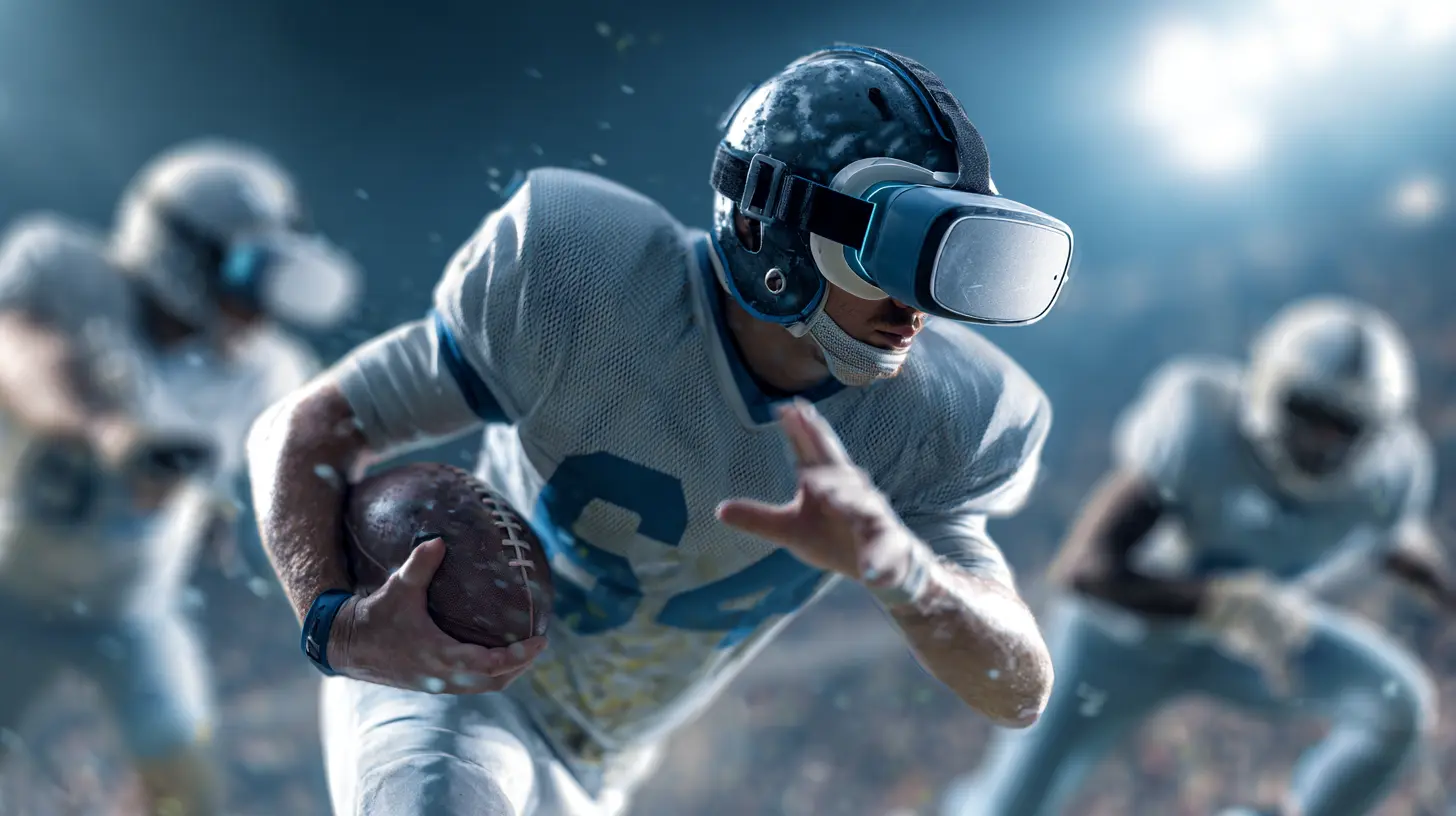
Let's be honest. Watching a game on a flat screen, even a massive 85-inch OLED, is still just watching a rectangle. You see the action, but you do not feel the space. You do not get the sense of a 6-foot-8 power forward bearing down on you, or the terrifying speed of a 95 mph fastball breaking toward the plate. Virtual reality changes that fundamental relationship. It does not just show you the game; it drops you inside the geometry of the field, the court, or the track. And the shift is not just about spectacle. It is about a completely different way of perceiving athletic performance, making split-second decisions, and even training your own body.
The Death of the Static Camera Angle
For the last seventy years, sports broadcasting has been a slave to the tripod. The main camera sits high in the stands, giving you a god-like view of the whole pitch. It is a great way to understand tactics, but it is a terrible way to understand what it feels like to be a player. You never see the gap close in real time. You never feel the pressure of a defender in your peripheral vision.
Virtual reality kills the static camera. Imagine a live NBA game where you are standing at half-court, not in the stands, but on the actual hardwood. You can turn your head and see the bench, the coaches, the shot clock. You can look down and see the scuff marks on the floor. When LeBron James drives to the basket, he is not a figure in a frame; he is a physical presence moving past you. The sense of scale is what shocks most first-time users. A basketball court is much bigger than it looks on TV. A tennis court feels impossibly narrow when you are standing at the baseline.
This is not a gimmick. It is a fundamental change in how your brain processes the action. Your vestibular system, the part of your inner ear that senses motion and balance, gets engaged. When the camera moves with the play, your body feels the acceleration, even if you are sitting on a couch. This creates a visceral connection that a 2D broadcast cannot replicate. The trade-off is that you lose the strategic overview. You cannot see the full formation of a soccer team when you are standing behind the goal. The solution, which many broadcasters are experimenting with, is a "director mode" where you can switch between an immersive sideline view and a floating tactical view. The choice is yours, but the default experience will no longer be the broadcasters choice.
The Player's Eye View: Empathy and Understanding
There is a reason why football quarterbacks have the hardest job in sports. You cannot understand it until you have seen what they see. VR offers that perspective with stunning accuracy. Using 360-degree cameras mounted on a players helmet, or more practically, using volumetric capture to reconstruct a play from the athletes exact head position, you can experience the chaos of a live play.
Imagine sitting in the pocket as a quarterback. You have three seconds to read the defense. The pass rush is coming from your blind side. You see a receiver break open, but you also see the safety drifting over the top. In VR, you feel the claustrophobia. You understand why quarterbacks throw the ball away. This does not just make you a more informed fan; it builds a deep, emotional empathy for the athlete. You stop yelling at the screen for a player to "just catch it" because you have seen the ball arrive with a blur of a defenders arm in your face.
This perspective has a huge practical application for coaching and training. Young athletes can use VR to study film from a first-person perspective, not just a coaches whiteboard. A rookie linebacker can sit in the film room and see exactly what a veteran sees, learning to read keys and triggers without taking a single physical rep. This is not about replacing physical practice. It is about accelerating the mental processing speed that separates elite players from average ones. The best players see the game slower because their brains process information faster. VR training is the most efficient way to build that processing speed, because it forces you to make decisions in real time against realistic, reactive opponents.
Training Without Physical Wear and Tear
The biggest enemy of any professional athlete is not the opponent; it is the accumulation of repetitive stress on the body. You cannot run a 40-yard dash every day. You cannot throw a slider at max effort every day. But you can mentally rehearse those actions thousands of times in VR without destroying your joints.
This is where the technology gets genuinely transformative. Consider a baseball hitter facing a pitcher. The hitter needs to see the ball out of the hand, recognize the spin, and decide to swing in under 400 milliseconds. Physical batting practice is limited by the pitchers arm. VR batting practice is unlimited. A system can simulate a specific pitchers release point, arm angle, and pitch speed, over and over, until the hitters brain recognizes the pattern subconsciously. The hitter is not building muscle memory for the swing itself, but they are building neural pathways for the decision-making process. When they get back in the box, the ball looks slower because their brain has already seen that exact pitch a hundred times in the headset.
The same logic applies to rehabilitation. A player recovering from an ACL tear cannot cut or jump, but they can stand in a VR environment and practice defensive slides, reading an offensive players hips, and reacting to a pass. This keeps the neural pathways for those movements active, preventing "rust" during the long months of physical recovery. The common mistake here is to think VR can replace physical training. It cannot. The proprioception, the feel of the ground, the resistance of a muscle under load, cannot be simulated. VR is a cognitive tool, not a physical one. Use it to keep the mind sharp while the body heals, not as a substitute for the gym.
The Social Experience: Watching Together, Apart
One of the biggest criticisms of early VR was that it was isolating. You put on a headset and you disappear from the living room. But the next generation of sports VR is built around social presence. Instead of watching alone, you will enter a virtual sports bar with your friends, even if they are in different cities. You will see their avatars, hear their voices in spatial audio, and high-five them when your team scores.
This is not the same as a video call. In a VR environment, you have a shared spatial reference. You are all looking at the same virtual court, and you can point at things, gesture, and react to the action as if you were in the same room. The technology creates a "co-presence" that is much stronger than a group chat. When your team scores, you can turn to your friend and see their avatar jump up. The emotional contagion of a live crowd, the gasps, the cheers, the groans, can be recreated with surprising fidelity.
The trade-off is the hardware barrier. Convincing your friends to each buy a headset is a hard sell. But the industry is moving toward lighter, cheaper headsets, and the social sports experience is likely to be the killer app that drives adoption. The misconception is that this will replace going to the stadium. It will not. Nothing replaces the smell of the grass and the roar of 70,000 people. But VR will replace the second-screen experience of watching on a tablet while scrolling social media. It will become the primary way to watch remote games with a community, while the stadium becomes a premium, occasional outing.
The Rise of the "Superfan" and Interactive Stats
Forget the ticker at the bottom of the screen. In VR, data becomes a physical object in your space. You can look at a player and see their speed, their heart rate, or their fatigue level floating above their head, if you choose to enable that layer. You can call up a heat map of a strikers positioning and have it materialize as a glowing grid on the pitch in front of you.
This creates a new type of fan, the "superfan," who does not just watch the game but analyzes it in real time from within the action. You are no longer a passive consumer of a broadcast feed. You are an active participant in the data stream. You can choose to watch the game with a tactical overlay, seeing the passing lanes as bright lines, or you can strip away all data and just watch the raw athleticism.
The danger here is information overload. The best VR experiences will be curated. You will have a "clean mode" for pure enjoyment and a "coach mode" for deep analysis. The best practice is to start with the clean mode. The human brain can only process so much visual information at once. If you clutter the environment with stats, you will miss the beauty of the play. The technology should be a tool you control, not a firehose of data that overwhelms you. A good rule of thumb is to ask yourself: "Am I watching the game, or am I reading about the game?" VR should always prioritize the former.
The Accessibility Revolution
This is the part that often gets overlooked. VR is not just for the wealthy or the tech-savvy. It is a massive leap forward for accessibility. For a person in a wheelchair, attending a live game is often a logistical nightmare. Navigating crowded concourses, dealing with inaccessible seating, and finding a sightline that works is exhausting. VR removes all of that. You can sit in the front row of a Formula 1 race, or on the bench of an NBA team, from your living room.
For people with visual or auditory impairments, VR offers customizable experiences that physical stadiums cannot match. You can increase the contrast of the players uniforms, magnify a specific area of the field, or enable a sign language interpreter that appears as a floating avatar in your field of view. The audio can be remixed, amplifying the sound of the ball hitting the bat or the skates cutting the ice, while suppressing the crowd noise for those with sensory sensitivities.
This is not a niche concern. It is a fundamental expansion of the fan base. Sports leagues are desperate to grow their audience, and VR is the most powerful tool they have to bring the game to people who were previously excluded. The best practice for developers is to design for accessibility from the ground up, not as an afterthought. This means testing with users who have a wide range of physical and cognitive abilities. The result will be a richer experience for everyone, because designing for accessibility often leads to better user interfaces for all.
The Economics: Paying for Presence
How will this be monetized? The current model of cable subscriptions and streaming bundles will not translate directly. VR is an experience economy. You will likely see a tiered pricing structure. A basic tier might offer a single fixed camera angle in VR. A premium tier will offer the "player cam" or the ability to switch between multiple immersive angles. The highest tier might offer a "virtual VIP" experience, where you are placed in a virtual luxury box with exclusive pre-game access and interviews.
The trade-off for the consumer is the cost of the hardware plus the cost of the content. This is a significant barrier. But consider the history of television. Early color TVs were expensive, and there was little content. Once the content arrived, the prices dropped. The same will happen with VR. The key driver will be live events. People will pay a premium to feel like they are at a championship game. The leagues know this, and they are investing heavily in volumetric capture technology to make these experiences compelling.
The common mistake is to think that a 360-degree video is the same as true VR. A 360-degree video is just a camera capturing a scene. True VR is a computer-generated or volumetrically captured environment where you can move your head and the perspective shifts correctly, and where you can interact with the environment. The difference is the difference between watching a movie and being in a video game. The former is passive; the latter is active. Sports leagues must invest in the latter, or the experience will feel flat and gimmicky.
The Future of Amateur and Youth Sports
This is where the technology becomes truly personal. Imagine a youth soccer player who cannot afford a personal coach. They can put on a VR headset and enter a training module that simulates a professional training session. The system tracks their head movement, their gaze, and their reaction time. It gives them feedback on their decision-making, not their physical technique. It tells them, "You looked at the ball too long when you received the pass. You should have scanned the field before the ball arrived."
This is a game-changer for talent development. It democratizes access to elite-level cognitive training. A kid in a rural town can get the same mental reps as a kid in an elite academy. The physical training still requires a field and a ball, but the mental training, the "football IQ," can be developed anywhere.
The caveat is that this must be supervised. A young athlete should not spend hours in VR without physical activity. The best approach is a blended model: use VR for 15 minutes of cognitive training, then go outside and practice the physical skills for an hour. The VR session primes the brain, and the physical session builds the body. This is the future of sports development, and it is already being tested in some professional academies, with promising results.
The Pitfalls and Misconceptions
Let us address the elephant in the room. Motion sickness is a real issue. The latency between your head movement and the visual update can cause nausea. This is why high refresh rates and low latency are critical. The industry is solving this, but it is a hardware limitation that will take a few more generations to fully eliminate. If you are prone to motion sickness, start with short sessions and use experiences that keep you stationary, like a courtside seat, rather than a moving player cam.
Another misconception is that VR will make us lazier. The opposite is true. VR is an active medium. You are moving your head, turning your body, and often standing up. It is much more physically engaging than sitting on a couch with a remote. Some fitness-focused VR games already burn as many calories as a moderate workout. When applied to sports viewing, it will keep you more mentally alert and engaged than passive television watching.
Finally, do not expect VR to be a perfect replica of reality. It is not. The graphics are not photorealistic yet. The physics of the ball can feel slightly off. But this is not a flaw; it is an opportunity. The stylized nature of VR can actually enhance the experience. A game rendered in a slightly cartoonish style can be easier to read, with clearer player outlines and more vivid colors. The goal is not to fool your eyes into thinking you are there, but to create a compelling, legible, and enjoyable representation of the event.
The Verdict
Virtual reality will not just change the way we watch sports; it will change what it means to be a fan. It will shift the experience from passive observation to active participation. It will give us the perspective of the athlete, the analysis of a coach, and the community of a stadium, all from the comfort of our own space. The technology is not perfect yet, but the trajectory is clear. The next time you watch a game, ask yourself if you are satisfied with the rectangle. If the answer is no, then the future is closer than you think.
all images in this post were generated using AI tools
Category:
Sports And SocietyAuthor:

Onyx Frye
Discussion
rate this article
2 comments
Anna McCartney
Virtual reality has the potential to revolutionize sports viewing. Fans could feel like they're part of the action, experiencing games from the best angles without leaving home. This immersive technology could deepen our connection to sports, making every match more exciting and engaging. Exciting times ahead!
September 18, 2026 at 10:38 AM
Solara McAndrews
Virtual reality in sports? Finally, I can be a couch potato and still feel like a superstar. Just imagine dodging virtual defenders while munching on chips. Who knew my athletic dreams would come true without leaving my snack-stuffed recliner? Bring it on!
August 31, 2026 at 1:09 PM
Onyx Frye
Sounds like the perfect game plan! Who says you can't have fun while staying comfy? Virtual reality is leveling up the fan experience for sure. Enjoy those chips!