How Climate Change Is Affecting Global Sporting Events
18 August 2026
Sport has always been a game of margins. A split second, a single degree of trajectory, a gust of wind. But now, the margins are shifting in ways that athletes, organizers, and fans have never had to confront before. Climate change is no longer a distant threat or a talking point for policy debates. It is altering the very conditions under which competitions are held, from the grass roots to the Olympic Games.
The relationship between climate and sport is not new. Outdoor sports have always depended on weather. But the stability that once allowed leagues to schedule seasons, venues to guarantee playing surfaces, and athletes to prepare for predictable conditions is eroding. What we are seeing now is not just a series of isolated weather disruptions. It is a structural change in how and where sport can be played safely, fairly, and sustainably.
The Rising Heat: When Performance Becomes a Health Risk
The most immediate and visible impact of climate change on sport is extreme heat. This is not about a hot summer day. It is about sustained temperatures that push the human body past its capacity to cool itself, especially during intense physical exertion.Consider the Australian Open, one of tennis's four Grand Slams. The tournament has long dealt with hot conditions, but the past decade has brought a new level of severity. In 2014, play was suspended for the first time in the tournament's history due to an extreme heat policy. Temperatures exceeded 40 degrees Celsius, and several players collapsed or vomited on court. Since then, the policy has been refined, but the underlying problem has only intensified. The tournament now regularly faces heat waves that would have been considered freak events a generation ago.
The issue is not just discomfort. When core body temperature rises above 40 degrees Celsius, the risk of heat stroke, organ failure, and cardiac arrest increases dramatically. For athletes, the choice is often between competing at a reduced level or risking serious medical consequences. This creates an unfair playing field, because not all bodies respond to heat the same way. Athletes from cooler climates, those with certain medical conditions, and those who have not acclimatized are at a distinct disadvantage.
The same problem is reshaping endurance sports. The Boston Marathon, a race steeped in tradition, has seen its average finish times rise in recent hot years. In 2012, the race was run in temperatures exceeding 32 degrees Celsius, and more than 2,000 runners required medical attention. The marathon's organizers now have a heat policy that allows them to cancel the race if conditions become too dangerous. But cancellation is a last resort, and the decision to run or not is fraught with liability and fairness concerns.
The practical advice for athletes and organizers is to shift training schedules to early morning or evening hours, use cooling vests and ice towels, and rely on real-time wet bulb globe temperature readings rather than simple air temperature. Wet bulb globe temperature accounts for humidity, wind, and solar radiation, and it is a far better indicator of heat stress. Yet many local and even national events still do not use it, relying instead on forecasts that miss the microclimates of specific venues.
Winter Sports on Thinning Ice
If heat is the most obvious problem, the loss of winter is the most existential. Winter sports are built on a foundation of reliable snow and ice. That foundation is cracking.The Winter Olympics have already been forced to adapt. The 2014 Sochi Games faced unusually warm temperatures, and organizers had to stockpile snow from the previous winter to ensure the slopes were usable. The 2018 Pyeongchang Games experienced wind and cold, but the more telling trend is the long-term reduction in snow cover across many traditional host regions. The 2026 Milan-Cortina Games are already being described as a test case for high-altitude, low-snow venues, with some events potentially moving to ski resorts that have invested heavily in artificial snowmaking.
Artificial snow is not a perfect substitute. It requires enormous amounts of water and energy, both of which are themselves affected by climate change. In regions facing drought, the water needed to make snow is a scarce resource. In regions with high electricity costs, the expense of running snowmaking equipment around the clock is prohibitive for all but the wealthiest venues. And the texture of artificial snow is different from natural snow. It is denser and icier, which changes the behavior of skis and snowboards and can lead to more injuries.
The bigger issue is the geographic contraction of viable winter sport venues. The number of ski resorts in the Alps that can guarantee snow cover for the full season has dropped significantly over the past 30 years. Many lower-altitude resorts now open late, close early, or rely on a patchwork of snowmaking that is both costly and fragile. For professional athletes, this means fewer places to train and compete. For youth athletes, it means the sport is increasingly accessible only to those who can travel to high-altitude venues or pay for expensive indoor facilities.
The misconception here is that technology can fix everything. It cannot. Snowmaking is a stopgap, not a solution. The real challenge is that winter sports are tied to specific ecosystems that are disappearing. The best practice for organizers is to diversify event timing, consider earlier or later seasons based on regional climate projections, and invest in indoor or covered venues where feasible. But those solutions carry their own costs and carbon footprints, creating a feedback loop that is difficult to break.
Playing Fields Under Water and Under Fire
Heat and snow are not the only problems. Changing precipitation patterns are leading to both flooding and drought, often in the same regions within the same year.Cricket offers a clear example. The sport is played on natural grass fields that require careful maintenance. Heavy rains can make outfields waterlogged and unplayable, while droughts can turn pitches hard and dangerous. In England, where cricket is a summer sport, the past decade has seen an increase in rain-affected matches, with several county and international games abandoned due to unsafe ground conditions. The 2019 Ashes series, for instance, was repeatedly interrupted by rain, forcing officials to use reserve days and alter the format.
Meanwhile, in Australia and South Africa, prolonged droughts have led to water restrictions that affect groundskeepers' ability to keep pitches and outfields in good condition. Some cricket grounds have invested in hybrid pitches that combine natural grass with synthetic fibers, which drain better and are more resilient to both drought and heavy rain. But these systems are expensive and not universally applicable.
Football, or soccer, is facing similar pressures. In the United States, Major League Soccer has seen matches postponed due to extreme heat advisories, and several stadiums have installed cooling systems or retractable roofs to mitigate conditions. But the broader issue is the quality of playing surfaces. Natural grass requires consistent watering and drainage, both of which are becoming harder to manage as weather patterns become more erratic.
The trade-off between natural and artificial turf is a contentious one. Artificial turf does not require water and can handle heavy use, but it gets far hotter than natural grass in direct sunlight, sometimes reaching surface temperatures that can cause burns. It also has a different bounce and traction, which many players dislike. The decision to use one over the other is not just a performance issue; it is a safety issue and a financial one. Artificial turf is cheaper to maintain in the long run but expensive to install, and it has a shorter lifespan than many people assume.
For organizers, the best practice is to conduct a climate risk assessment for every venue before scheduling events. This means looking at historical weather data, future projections, and the specific vulnerabilities of the site, such as flood zones, heat islands, and water availability. Too often, this analysis is done after a problem occurs, rather than before.
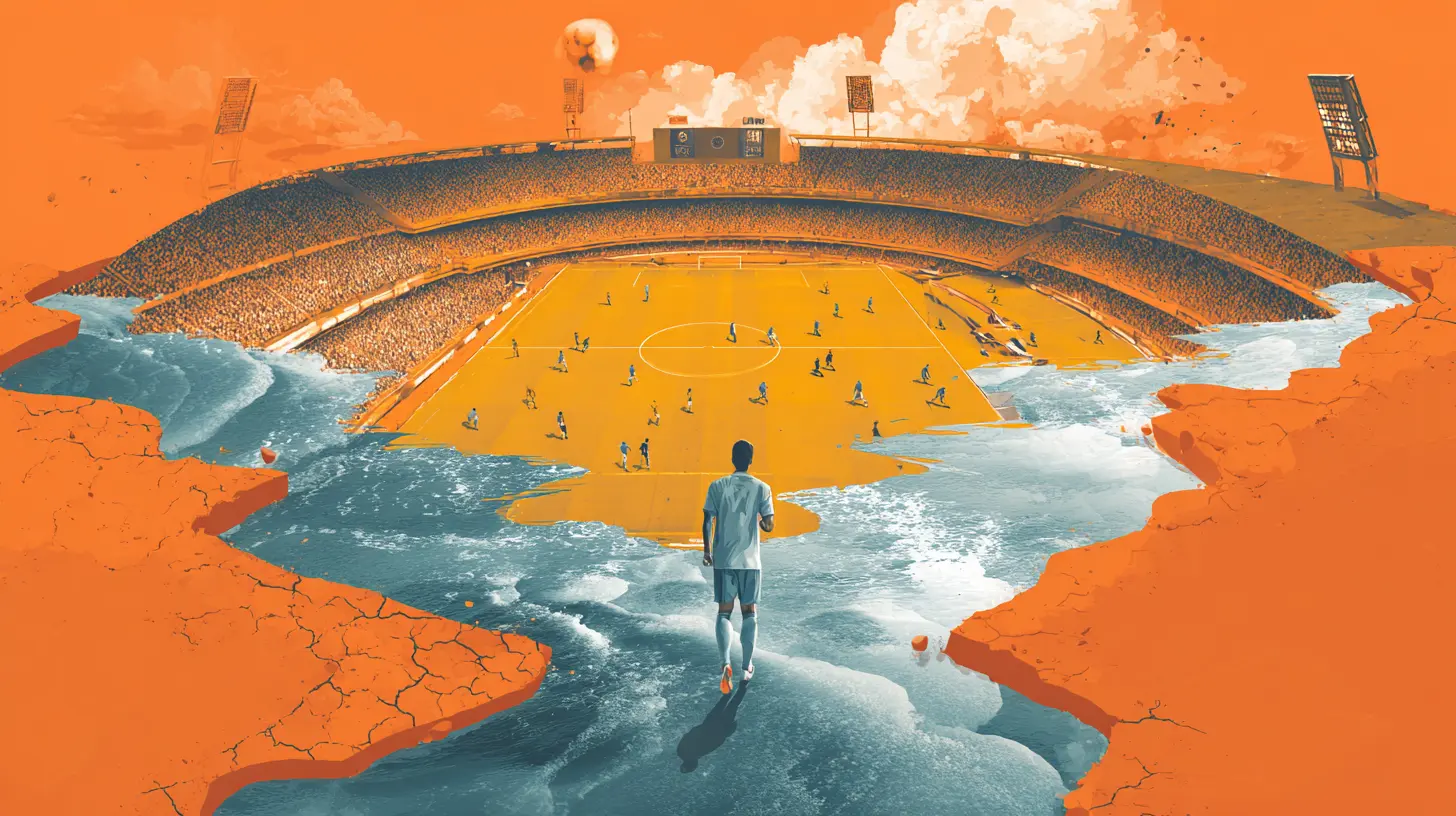
The Changing Calendar of Sport
Leagues and governing bodies are slowly waking up to the need to rethink their schedules. The traditional sports calendar is based on historical weather patterns that no longer hold.The start of the European football season is a case in point. Traditionally, the season runs from late August to May, with a winter break in some countries. But August temperatures in southern Europe have become dangerously hot, and several matches have been played in conditions exceeding 35 degrees Celsius. Some leagues have discussed moving the season start later, but this conflicts with the international match calendar and the desire for a summer break.
In the United States, the NFL has faced criticism for scheduling games in late summer in southern cities like Miami and Phoenix, where heat and humidity can be extreme. The league has implemented rules for heat-related timeouts, but these are reactive measures. A more proactive approach would be to schedule more games in domed stadiums or to shift the season's start, but both options face resistance from broadcasters and fans who expect the current structure.
The trade-off is between tradition and safety. Sports are deeply tied to their calendars, and changing them has ripple effects on broadcasting rights, ticket sales, youth leagues, and even cultural identity. But clinging to a schedule that no longer matches the climate is a form of denial. The most forward-thinking organizations are already planning for flexible seasons, with contingency windows for rescheduling and clear criteria for when conditions are unsafe.
One practical recommendation is to use climate models to inform scheduling decisions years in advance. For example, if a city is projected to have a 20 percent chance of extreme heat in August, that should factor into whether a major event is placed there. This kind of long-term planning is rare, but it is becoming more necessary as weather becomes less predictable.
The Financial Cost of Adaptation
Adapting to climate change is not cheap, and the financial burden is not evenly distributed. Wealthy leagues and national teams can afford state-of-the-art stadiums, cooling systems, and travel to favorable climates. Smaller clubs, regional events, and developing nations cannot.This creates a competitive imbalance that goes beyond the field. A football club in a mid-tier league cannot afford to install a retractable roof or an underground heating system for its pitch. A regional marathon cannot afford to hire a fleet of ice vests and medical staff for every runner. A small ski resort cannot invest in high-capacity snowmaking equipment without going bankrupt.
The result is that climate change is becoming a barrier to participation. Athletes from wealthier backgrounds have more options for training environments, while those from poorer regions are forced to compete in increasingly hostile conditions. This is not just a fairness issue; it is a talent issue. The world is losing potential champions because they cannot afford to adapt.
There is also the question of insurance. Many event organizers are finding that their insurance premiums are rising as climate-related disruptions become more common. Some are being denied coverage entirely for certain risks, such as flooding or extreme heat. This forces organizers to either self-insure, which is risky, or to cancel events, which is a loss for everyone.
The best practice here is to build resilience into the budget from the start. This means setting aside funds for weather-related contingencies, investing in flexible infrastructure, and negotiating contracts with vendors that include climate clauses. It also means being honest about the risks. Organizers who pretend that extreme weather is a one-off event are setting themselves up for failure.
The Carbon Footprint of Sport Itself
It would be hypocritical to discuss climate change and sport without acknowledging that sport is a significant contributor to the problem. The global sports industry is responsible for a substantial amount of carbon emissions, driven by travel, energy use in stadiums, and the production of equipment and merchandise.The biggest culprit is travel. A single international football tournament can involve thousands of flights, buses, and car trips. The World Cup, the Olympics, and major tennis and golf tours all rely on moving large numbers of people across the globe. The carbon footprint of a single athlete's season can be comparable to that of a small household.
There are efforts to address this. Some leagues are investing in renewable energy for their stadiums. Others are experimenting with carbon offset programs, though these are controversial and not always effective. The most meaningful changes are structural: reducing the number of events, consolidating travel, and using virtual technology for press conferences and meetings.
But there is a tension here. Fans want to attend events in person, and the atmosphere of a live match is part of the appeal. Reducing travel means reducing the scale of events, which has economic and cultural consequences. The trade-off is not easy, and there is no one-size-fits-all solution.
What is clear is that sport cannot credibly advocate for climate action while ignoring its own footprint. The organizations that are leading the way are those that are transparent about their emissions and are actively working to reduce them. This transparency builds trust with fans and sponsors, and it sets an example for other industries.
Misconceptions and Common Mistakes
One common misconception is that climate change only affects outdoor sports in hot regions. In reality, indoor sports are also vulnerable. The energy required to cool a large indoor arena during a heat wave is enormous, and the cost can be prohibitive. In some cases, indoor events have been postponed because the cooling systems could not keep up with the demand.Another misconception is that athletes will simply adapt over time. The human body has limits, and no amount of training can overcome the physical constraints of extreme heat or poor air quality. In fact, adaptation can be harmful if it leads athletes to push through dangerous conditions in the name of toughness.
A common mistake made by organizers is to rely on past experience rather than current data. A venue that has never flooded might flood this year. A city that has never had a heat wave might have one next week. The climate is changing, and historical precedent is no longer a reliable guide.
Another mistake is to treat climate adaptation as a one-time project. It is not. It requires continuous monitoring, reassessment, and adjustment. An event that is safe this year might not be safe next year. The organizations that succeed are those that build climate considerations into their permanent decision-making processes, not just their emergency plans.
What Athletes and Organizers Can Do Now
For athletes, the first step is education. Understand the specific climate risks of your sport and your region. Know the signs of heat illness, and do not ignore them. Work with coaches and medical staff to develop a heat acclimatization plan that is based on science, not tradition.For organizers, the first step is assessment. Conduct a thorough climate risk analysis for every event, no matter how small. This should include not just temperature and precipitation, but also air quality, wind, and humidity. Develop clear thresholds for cancellation or modification, and communicate them to participants and fans in advance.
For fans, the role is to demand better. Support events that prioritize safety and sustainability. Ask questions about how venues are adapting to climate change. Hold leagues and governing bodies accountable for their carbon footprints and their treatment of athletes in extreme conditions.
The Road Ahead
Climate change is not going away, and sport will have to change with it. This is not a message of doom. It is a call to action. The same ingenuity that has driven athletic performance to new heights can be applied to making sport more resilient, more equitable, and more sustainable.The sports that thrive in the coming decades will be those that treat climate adaptation as a core part of their strategy, not an afterthought. They will be the ones that listen to science, invest in flexibility, and prioritize the health and safety of everyone involved. They will be the ones that recognize that the game is not just about winning, but about being able to play at all.
The future of sport is not guaranteed. But it can be shaped. The decisions made now, by athletes, organizers, and fans, will determine whether the next generation gets to experience the joy of competition in a world that is hotter, wetter, and more unpredictable. That is a challenge worth taking seriously, and a game worth winning.
all images in this post were generated using AI tools
Category:
Sports And SocietyAuthor:

Onyx Frye
Discussion
rate this article
2 comments
Lark McInerney
This article highlights a pressing issue that affects athletes and fans alike. Climate change is impacting our beloved sports, shifting schedules and altering venues. It's crucial we recognize these challenges and work together to foster a sustainable future for all sporting events. Every effort counts in preserving the spirit of competition.
August 30, 2026 at 5:02 AM
Etta McNair
Climate change poses serious challenges for sports, impacting schedules, locations, and athletes' performance worldwide.
August 25, 2026 at 11:48 AM
Onyx Frye
Absolutely, the effects of climate change are reshaping how sports are organized and experienced. It's crucial for the industry to adapt to these challenges.